Table of Content
Title


Take Control of Your
Mental Well-Being
Professional support that helps you feel balanced and empowered.

Take Control of Your
Mental Well-Being
Professional support that helps you feel balanced and empowered.
Take Control of Your
Mental Well-Being
Professional support that helps you feel balanced and empowered.
How Depression Can Affect Thinking, Motivation, and Everyday Decisions
How Depression Can Affect Thinking, Motivation, and Everyday Decisions
How Depression Can Affect Thinking, Motivation, and Everyday Decisions
How Depression Can Affect Thinking, Motivation, and Everyday Decisions
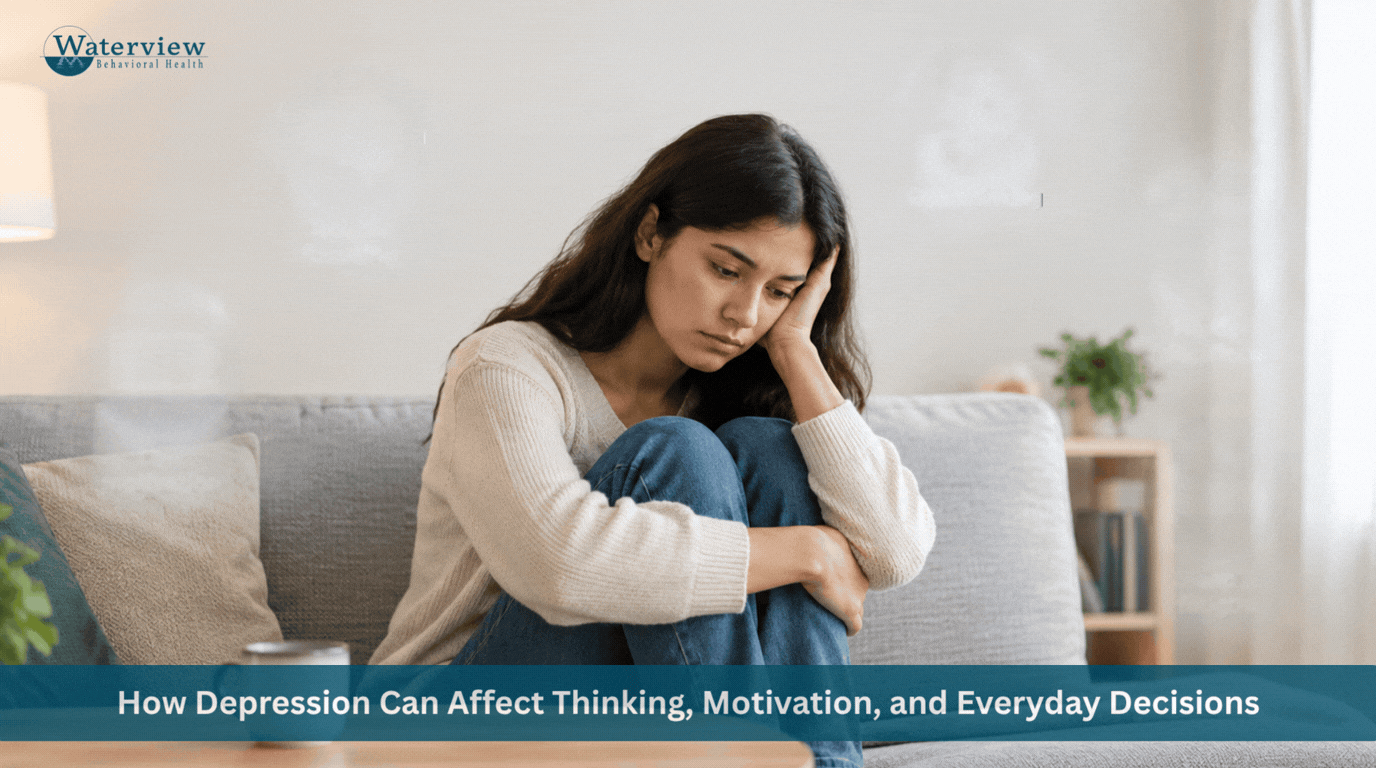
Most people think of depression as feeling sad. Honestly, that's only part of the picture. A lot of people say the first thing they noticed wasn't sadness at all. It was that their brain felt slow, choosing what to eat for dinner felt exhausting, and tasks they used to handle on autopilot suddenly felt huge.
If that sounds familiar, you're not imagining it. These changes are well-documented depression symptoms, and they can show up long before anyone uses the word "depressed." Here's how depression can affect the way you think, what gets in the way of everyday life, and what support can look like.
How Can Depression Change the Way You Think and Make Decisions?
Depression doesn't only change how you feel. It changes how your mind works. Concentration is one of the first things to go. You might read the same paragraph three times, lose track of a conversation halfway through, or walk into a room and forget why you're there. Memory gets patchy, and thoughts can feel like they're moving through fog.
Decision-making takes a hit too. Look, when your mind is already stretched thin, even small choices can feel like a lot. Which email do you answer first? What do you make for lunch? Do you say yes to the invitation? Many people with depression either freeze or default to "I'll deal with it later," which is just a way of protecting a tired brain.
There's also the way depression colors your thinking. Thoughts tend to lean negative, so plans look riskier, outcomes look worse, and your own judgment feels less trustworthy. That's why people often second-guess decisions they would normally make without thinking twice.
Emotional responsiveness can change as well. Some people feel everything more heavily, while others feel flat or numb. Good news doesn't land the way it used to, and things that once brought joy barely register. That emotional dulling is a real symptom, not a sign you've stopped caring.
Why Does Depression Make Everyday Tasks Feel More Difficult?
Everyday life runs on a surprising amount of mental energy. Replying to a text, paying a bill, answering the phone, getting dressed: each one needs a little planning, focus, and follow-through. Depression drains all three at once.
So tasks that once took five minutes can take an hour, or never get started. Laundry piles up. Mail goes unopened. A work project that should be simple sits untouched, and the guilt grows with every day it waits. Many people describe it as moving through wet cement. You know what needs doing, but the path from knowing to doing feels blocked.
Over time, the pile gets bigger and the stress gets heavier, which feeds the depression. It's a loop, and it's one of the main reasons people struggle to climb out of it alone.

Can Sleep and Fatigue Make Daily Tasks Harder?
They really can, and they're closely tied to depression. Some people sleep far too little, lying awake with a racing mind. Others sleep far too much and still wake up exhausted. Either way, a tired brain has less to work with. Focus drops, patience shrinks, and the effort needed for ordinary tasks goes up. Persistent fatigue that doesn't improve with rest is worth mentioning to a professional, because it's often part of the bigger picture.
How Can Depression Affect Motivation Without Feeling Like Laziness?
Here's the thing: motivation isn't a character trait. It depends on your brain's ability to anticipate reward, feel interested, and generate energy. Depression interferes with all of that. When the "this will be worth it" signal gets quiet, getting started feels pointless, even for things you genuinely care about.
That's the key difference from laziness. Someone who's simply unmotivated usually feels fine about it. Someone with depression often feels terrible about it. They want to get up, call a friend, or go to the gym, and they can't make themselves do it. The guilt and self-criticism that follow can make everything worse.
If you've been calling yourself lazy, it might help to ask a different question. Has this lasted two weeks or more? Is it affecting work, relationships, or taking care of yourself? Is it showing up alongside changes in sleep, appetite, or mood? If the answer is yes, it's more likely depression than a lack of willpower.
Is It Burnout, a Rough Patch, or Depression?
It can be hard to tell. A rough patch usually has a clear cause and eases as things settle down. Burnout is tied to overwork and tends to improve when the load lifts or you get real rest. Depression often hangs around even when circumstances improve, and it tends to spread beyond work into every part of life. If you can't tell which one you're dealing with, that's a good reason to talk to a professional rather than guess.
What Are the Next Steps When Depression Starts Affecting Daily Life?
Start by taking it seriously. You don't need to wait until things fall apart. If low mood, numbness, trouble focusing, or exhaustion has lasted two weeks or more, or if you're slipping on work, relationships, or basic self-care, it's time to reach out.
A professional assessment is the first step. It helps sort out what's driving your symptoms and what level of care fits. For some people, weekly therapy is enough. For others, it isn't, and that's where more structured care comes in.
An intensive outpatient program, often called an IOP for depression, offers several days of focused therapy each week while you keep living at home. You get consistent support, practical coping skills, and a team that sees your progress over time, without needing to step away from your life completely. As a mental wellness center in Wallingford, CT, Waterview Behavioral Health offers an IOP that meets three days per week, with clinical coordination and medication management as part of care.
Frequently Asked Questions
Can depression make it hard to concentrate at work or school?ion
Yes. Depression often slows thinking, makes attention drift, and turns simple tasks into mental slogs. People commonly lose their place while reading or forget what they walked into a room for. These changes are a recognized part of depression, not a personal failing.
How do I know if low motivation is depression or just stress?
Stress usually eases when the pressure does. Depression tends to linger for two weeks or more, spread across work, home, and relationships, and often comes with changes in sleep, appetite, or mood. If it persists, a professional assessment can clarify what's happening.
What is an IOP for depression, and who is it for?
An intensive outpatient program offers structured therapy several days a week while you keep living at home. It suits people who need more support than weekly therapy but don't require hospitalization. Waterview's program in Wallingford, CT meets three days per week.
Is feeling emotionally numb a sign of depression?
It can be. Many people with depression describe feeling flat, detached, or unable to enjoy things that used to matter. Emotional numbness isn't always sadness. It can also show up alongside anxiety, trauma, or burnout, so a clinician can help sort out what's driving it.
How does a mental wellness center help with depression?
Think of a mental wellness center as one place where your care comes together. You can get an assessment, therapy, group support, and medication management without piecing it all together yourself. Aftercare planning also helps you hold onto your progress once the program ends.
Most people think of depression as feeling sad. Honestly, that's only part of the picture. A lot of people say the first thing they noticed wasn't sadness at all. It was that their brain felt slow, choosing what to eat for dinner felt exhausting, and tasks they used to handle on autopilot suddenly felt huge.
If that sounds familiar, you're not imagining it. These changes are well-documented depression symptoms, and they can show up long before anyone uses the word "depressed." Here's how depression can affect the way you think, what gets in the way of everyday life, and what support can look like.
How Can Depression Change the Way You Think and Make Decisions?
Depression doesn't only change how you feel. It changes how your mind works. Concentration is one of the first things to go. You might read the same paragraph three times, lose track of a conversation halfway through, or walk into a room and forget why you're there. Memory gets patchy, and thoughts can feel like they're moving through fog.
Decision-making takes a hit too. Look, when your mind is already stretched thin, even small choices can feel like a lot. Which email do you answer first? What do you make for lunch? Do you say yes to the invitation? Many people with depression either freeze or default to "I'll deal with it later," which is just a way of protecting a tired brain.
There's also the way depression colors your thinking. Thoughts tend to lean negative, so plans look riskier, outcomes look worse, and your own judgment feels less trustworthy. That's why people often second-guess decisions they would normally make without thinking twice.
Emotional responsiveness can change as well. Some people feel everything more heavily, while others feel flat or numb. Good news doesn't land the way it used to, and things that once brought joy barely register. That emotional dulling is a real symptom, not a sign you've stopped caring.
Why Does Depression Make Everyday Tasks Feel More Difficult?
Everyday life runs on a surprising amount of mental energy. Replying to a text, paying a bill, answering the phone, getting dressed: each one needs a little planning, focus, and follow-through. Depression drains all three at once.
So tasks that once took five minutes can take an hour, or never get started. Laundry piles up. Mail goes unopened. A work project that should be simple sits untouched, and the guilt grows with every day it waits. Many people describe it as moving through wet cement. You know what needs doing, but the path from knowing to doing feels blocked.
Over time, the pile gets bigger and the stress gets heavier, which feeds the depression. It's a loop, and it's one of the main reasons people struggle to climb out of it alone.
Can Sleep and Fatigue Make Daily Tasks Harder?
They really can, and they're closely tied to depression. Some people sleep far too little, lying awake with a racing mind. Others sleep far too much and still wake up exhausted. Either way, a tired brain has less to work with. Focus drops, patience shrinks, and the effort needed for ordinary tasks goes up. Persistent fatigue that doesn't improve with rest is worth mentioning to a professional, because it's often part of the bigger picture.
How Can Depression Affect Motivation Without Feeling Like Laziness?
Here's the thing: motivation isn't a character trait. It depends on your brain's ability to anticipate reward, feel interested, and generate energy. Depression interferes with all of that. When the "this will be worth it" signal gets quiet, getting started feels pointless, even for things you genuinely care about.
That's the key difference from laziness. Someone who's simply unmotivated usually feels fine about it. Someone with depression often feels terrible about it. They want to get up, call a friend, or go to the gym, and they can't make themselves do it. The guilt and self-criticism that follow can make everything worse.
If you've been calling yourself lazy, it might help to ask a different question. Has this lasted two weeks or more? Is it affecting work, relationships, or taking care of yourself? Is it showing up alongside changes in sleep, appetite, or mood? If the answer is yes, it's more likely depression than a lack of willpower.
Is It Burnout, a Rough Patch, or Depression?
It can be hard to tell. A rough patch usually has a clear cause and eases as things settle down. Burnout is tied to overwork and tends to improve when the load lifts or you get real rest. Depression often hangs around even when circumstances improve, and it tends to spread beyond work into every part of life. If you can't tell which one you're dealing with, that's a good reason to talk to a professional rather than guess.
What Are the Next Steps When Depression Starts Affecting Daily Life?
Start by taking it seriously. You don't need to wait until things fall apart. If low mood, numbness, trouble focusing, or exhaustion has lasted two weeks or more, or if you're slipping on work, relationships, or basic self-care, it's time to reach out.
A professional assessment is the first step. It helps sort out what's driving your symptoms and what level of care fits. For some people, weekly therapy is enough. For others, it isn't, and that's where more structured care comes in.
An intensive outpatient program, often called an IOP for depression, offers several days of focused therapy each week while you keep living at home. You get consistent support, practical coping skills, and a team that sees your progress over time, without needing to step away from your life completely. As a mental wellness center in Wallingford, CT, Waterview Behavioral Health offers an IOP that meets three days per week, with clinical coordination and medication management as part of care.
Frequently Asked Questions
Can depression make it hard to concentrate at work or school?ion
Yes. Depression often slows thinking, makes attention drift, and turns simple tasks into mental slogs. People commonly lose their place while reading or forget what they walked into a room for. These changes are a recognized part of depression, not a personal failing.
How do I know if low motivation is depression or just stress?
Stress usually eases when the pressure does. Depression tends to linger for two weeks or more, spread across work, home, and relationships, and often comes with changes in sleep, appetite, or mood. If it persists, a professional assessment can clarify what's happening.
What is an IOP for depression, and who is it for?
An intensive outpatient program offers structured therapy several days a week while you keep living at home. It suits people who need more support than weekly therapy but don't require hospitalization. Waterview's program in Wallingford, CT meets three days per week.
Is feeling emotionally numb a sign of depression?
It can be. Many people with depression describe feeling flat, detached, or unable to enjoy things that used to matter. Emotional numbness isn't always sadness. It can also show up alongside anxiety, trauma, or burnout, so a clinician can help sort out what's driving it.
How does a mental wellness center help with depression?
Think of a mental wellness center as one place where your care comes together. You can get an assessment, therapy, group support, and medication management without piecing it all together yourself. Aftercare planning also helps you hold onto your progress once the program ends.
Latest News
Latest News

The Overlap Between Chronic Pain and Depression
How Depression Can Affect Thinking, Motivation, and Everyday Decisions

When Irritability Is the Symptom: Anger and Depression in Adults

Perinatal Anxiety: The Postpartum Condition We Talk About Less Than Depression

How Chronic Loneliness Affects Mental Health and Treatment Engagement