
Table of Content
Title


Take Control of Your
Mental Well-Being
Professional support that helps you feel balanced and empowered.


Take Control of Your
Mental Well-Being
Professional support that helps you feel balanced and empowered.


Take Control of Your
Mental Well-Being
Professional support that helps you feel balanced and empowered.
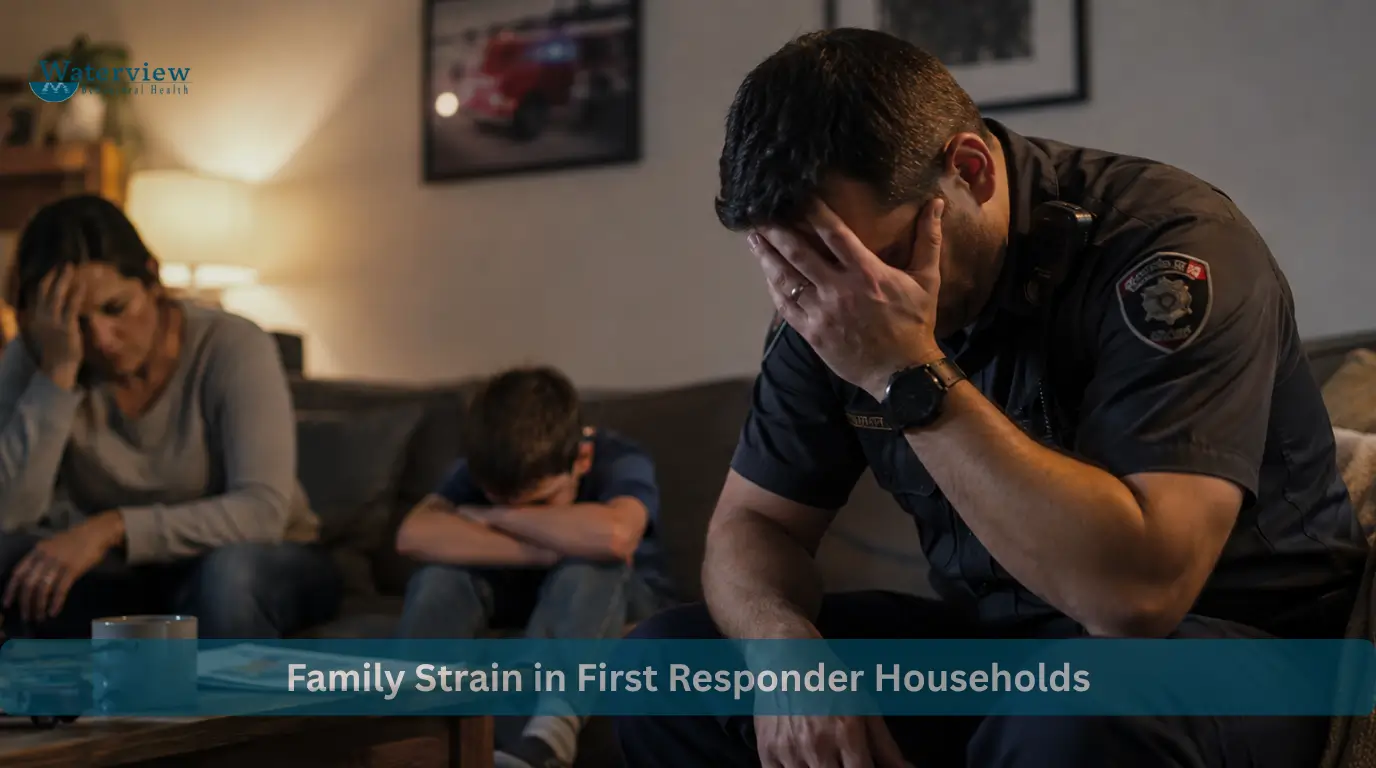
Family Strain in First Responder Household

Police officers, firefighters, EMS providers, corrections staff, and dispatchers are trained to do something most people never have to learn: stay steady when everything around them is falling apart. That kind of composure keeps people alive on a call. The trouble is, it doesn’t always know when to switch off, and a lot of families end up living with whatever gets left on after the shift ends.
For many first responder households, the job quietly becomes a member of the family. It shows up as silence at the dinner table, a short fuse over something small, trouble sleeping, emotional distance, or a general sense that everyone is tiptoeing around a stress that’s never really been named out loud. Often it’s the first responder who eventually walks into treatment, but partners, spouses, and kids have usually been carrying the secondary weight of it for years before anyone connects the dots clinically.
It’s worth saying plainly: family strain in a first responder household isn’t just a private relationship issue. Most of the time it’s tangled up with occupational trauma, chronic stress, shift disruption, and the culture of public safety work itself. When providers understand that bigger picture, they’re better positioned to help these families move away from blame and toward real communication, support, and recovery.
How the Job Follows People Home
First response work asks people to contain their emotions in the moment. During a call, a crisis, or a high-risk interaction, a responder often has to push down fear, grief, anger, or shock just to keep functioning. Do that enough times and it stops being a conscious effort. It becomes automatic. The same emotional shutoff that gets someone through a rough shift can make it genuinely hard to be present with a partner or a child a few hours later.
At home, that can look like withdrawal, flatness, irritability, or wanting to be alone. Family members often experience the first responder physically there but emotionally somewhere else. Kids may not understand why a parent feels far away. Partners may feel shut out or rejected. And honestly, the first responder often isn’t trying to create that distance at all. A lot of the job is still running in their body and nervous system long after the shift has technically ended.
Hypervigilance tends to follow people home too. Someone who’s spent years scanning for danger on the job doesn’t always stop scanning once they’re off the clock. That can look like overprotective parenting, tension in crowded places, big reactions to small risks, or a strong need to control the environment. Over time, family members start adjusting plans, conversations, and daily routines around what the responder can tolerate.
These shifts usually happen quietly, almost without anyone deciding to make them. A spouse stops bringing up certain outings. A kid learns not to interrupt after a hard shift. Little by little, the whole household reorganizes itself around avoiding conflict and protecting the responder from more stress. Those adjustments often start from a place of love, but they can leave everyone feeling boxed in, lonely, and unsure how to even bring it up.
Shift Work and the Toll of Constant Disruption
Family strain isn’t only about trauma exposure. Schedule disruption matters just as much. Overnight shifts, rotating schedules, mandatory overtime, holidays worked, and unpredictable call volume all chip away at the ordinary rhythms a family relies on: dinners together, school events, weekends, bedtime, shared rest.
The non-first-responder partner often ends up carrying more of the domestic and emotional load during these stretches. Childcare, the household to-do list, the family’s social calendar, and their own quiet worry about the responder’s safety tend to fall on them. Over time, that imbalance can breed resentment, even when both people know the schedule isn’t really anyone’s fault.
Long stretches of high-intensity work deepen the disconnect further. After a major incident, a run of overnight shifts, or a stretch of overtime, a responder often comes home running on empty right at the moment their family is hoping to reconnect. Without support, both sides can start interpreting each other through frustration. The family feels abandoned. The responder feels misunderstood or pressured. Neither is really wrong, and neither is really being fair to the other.
Clinically, it helps to name this pattern without pointing fingers at either side. The job creates conditions most families were never taught how to handle. Left unaddressed, that strain can deepen, and symptoms like anxiety, depression, substance use, anger, or post-traumatic stress can become that much harder to treat.
What Partners and Spouses Often Carry
Partners of first responders describe a particular kind of loneliness. They’re often living alongside someone who is deeply devoted to helping others but struggles to open up emotionally at home. They worry about safety during shifts, manage a schedule they don’t control, and then feel like they can’t even raise a concern without hearing “you don’t understand the job.”
Some partners become finely tuned to the responder’s mood, picking up on shifts in tone, posture, sleep, drinking, or withdrawal before anyone else notices. That awareness can be genuinely useful, but it’s also exhausting. When one person is constantly reading the emotional weather in the house, the relationship starts to feel less like a partnership and more like ongoing crisis management.
This is where the idea of secondary traumatic stress becomes useful. It describes the emotional and psychological impact that can build up in someone who is closely connected to a person exposed to trauma. Partners and kids don’t witness the calls themselves, but they can still absorb the ripple effects through changes in the responder’s mood, availability, and how the household functions day to day.
None of this means every first responder family is struggling or heading toward crisis. Plenty of these families are resilient, close, and proud of the work being done. But resilience doesn’t erase the need for support. If anything, the strongest families are usually the ones willing to name the strain early and get help before the disconnection has a chance to settle in.
How Kids Pick Up on It
Kids in first responder households notice more than adults often realize. They may know a parent works somewhere dangerous or intense without knowing any of the specifics, and they can still sense when that parent is distracted, on edge, tired, or checked out. Many learn to adjust their own behavior to keep the household calmer.
Some kids become the quiet, protective type, keeping their own needs to themselves. Others act out in response to inconsistency, anxiety, or emotional distance. A child usually won’t say “I’m being affected by occupational trauma in this house.” Instead, it shows up as trouble sleeping, separation anxiety, struggles at school, anger, withdrawal, or more friction with siblings and caregivers.
For providers, it’s worth assessing family functioning without assuming something is broken. Simple questions about routines, communication, conflict, emotional availability, and how much the child understands about the parent’s work can reveal a lot. When it’s clinically appropriate, bringing the family into the conversation can help kids understand that a parent’s stress reactions aren’t something they caused.

Why Family Involvement Matters in Treatment
When a first responder enters treatment, the family is part of that clinical picture whether they’re formally included or not. That person goes home every day to a household that can either reinforce recovery or keep circling the same unspoken stress. Treatment gains can take root at home, but they can just as easily get worn down by ongoing conflict, misunderstanding, or long-standing patterns.
Family involvement doesn’t have to mean traditional couples counseling, and it isn’t about blaming the relationship for someone’s symptoms. In a clinical setting, family work often focuses on communication, psychoeducation, boundary setting, relapse prevention, emotional regulation, and helping loved ones understand what the responder is actually working through in treatment.
A partner might benefit from understanding why avoidance, irritability, or emotional numbing tend to follow trauma exposure. The first responder, in turn, might benefit from hearing how those patterns land on the household without immediately feeling defensive or ashamed about it. Together, the family can start separating the person from the symptoms, and the symptoms from the occupational culture that often discourages people from asking for help in the first place.
Family involvement can also lead to practical changes. That might mean planning decompression time after a shift, setting up predictable check-ins, clarifying who’s handling what during demanding stretches, or agreeing on shared language for when stress is starting to build. Small, concrete adjustments go a long way toward easing the sense that everyone is just guessing or walking on eggshells.
Moving Away from Shame and Blame
First responders tend to carry a strong sense of duty. Most are used to being the helper, not the one who needs help. So when family strain becomes impossible to ignore, it often triggers shame: I should be able to handle this. My family deserves better. If I talk about this, it means I’m weak. Shame like that tends to keep symptoms hidden and makes repair harder to reach.
Family members carry their own version of shame too. Partners wonder if they’re not being supportive enough. Kids sometimes believe they caused the tension. Spouses feel guilty for resenting a job that serves the community, even when the resentment makes complete sense.
A more useful clinical frame is that first responder work affects the whole family system, not just the individual. The goal isn’t to figure out who’s at fault. It’s to understand what the work has changed, what patterns have grown up around it, and what kind of support is actually needed now. When families can move from blame to shared understanding, treatment has a lot more room to work.
When a Higher Level of Support Makes Sense
Some first responders and their families do well with outpatient therapy on its own. Others need something more structured, especially when symptoms start affecting daily functioning, relationships, work performance, sleep, substance use, or safety. An intensive outpatient program can offer more support than a weekly therapy session while still letting someone live at home and stay connected to their family.
Providers might consider a structured outpatient referral when a first responder is dealing with persistent depression, anxiety, trauma-related symptoms, emotional numbing, anger, panic, substance use concerns, or real difficulty functioning within the family. Family strain on its own may not be the deciding factor for referral, but it’s often a strong sign of just how deeply occupational stress has worked its way into someone’s life.
Family members deserve support too, especially when anxiety, depression, burnout, isolation, or relationship distress starts to feel constant. Helping the responder matters, but helping the household matters just as much.
How Waterview Behavioral Health Can Help
Waterview Behavioral Health in Wallingford, Connecticut offers structured outpatient treatment for adults facing mental health and co-occurring substance use concerns. For first responders and their families, this level of care can address the real clinical effects of chronic stress, trauma exposure, depression, anxiety, emotional dysregulation, and substance use patterns that touch both individual functioning and family life.
Waterview’s intensive outpatient programming is built for people who need more than a weekly therapy appointment but don’t require inpatient hospitalization. Treatment can include evidence-based group therapy, individual support, psychiatric care, skills development, and coordinated care planning. When it’s clinically appropriate, family involvement helps loved ones understand the recovery process and support the changes happening at home.
For referring providers, Waterview can serve as a partner in the care continuum whenever a client’s symptoms are affecting relationships, work, or day-to-day stability. The goal isn’t just symptom reduction on its own. It’s helping someone build real coping skills, improve how they function, and return to family and community life with more support and more stability behind them.
If you’re a clinician, discharge planner, EAP professional, or community provider working with a first responder or family member who might benefit from structured outpatient care, Waterview welcomes the chance to collaborate on a referral plan that fits.

Ready to Take the Next Step?
The sooner you get help, the sooner healing begins. Talk to our team now.
FAQ
Q.Is family strain common in first responder households?
Yes, and it’s more common than most families realize. Shift work, trauma exposure, emotional withdrawal, and hypervigilance can all put pressure on a household. It doesn’t mean the family is failing. It usually means the job’s demands have found their way home.
Q.What is secondary traumatic stress?
Secondary traumatic stress is the emotional toll that can build up in someone close to a person exposed to trauma. Partners and kids don’t witness the calls themselves, but they can absorb the effects through a responder’s mood, behavior, or emotional distance.
Q.Does involving family in treatment mean the relationship is the problem?
Not at all. Family involvement isn’t about pointing fingers at the relationship. It’s meant to open up communication, offer education, build stronger support at home, and help everyone understand the patterns that grew out of occupational stress or trauma-related symptoms.
Q.When should a provider consider referring a first responder to an intensive outpatient program?
A referral makes sense when depression, anxiety, trauma-related distress, substance use, anger, sleep issues, or emotional withdrawal start interfering with work, relationships, parenting, or daily life. An IOP can offer more structure and support than a weekly therapy appointment provides.
Q.Can Waterview work with co-occurring mental health and substance use concerns?
Yes. Waterview treats adults dealing with both mental health and substance use concerns at the same time. Every treatment plan starts with a clinical assessment, so care is shaped around what each person actually needs rather than a one-size-fits-all approach.
Police officers, firefighters, EMS providers, corrections staff, and dispatchers are trained to do something most people never have to learn: stay steady when everything around them is falling apart. That kind of composure keeps people alive on a call. The trouble is, it doesn’t always know when to switch off, and a lot of families end up living with whatever gets left on after the shift ends.
For many first responder households, the job quietly becomes a member of the family. It shows up as silence at the dinner table, a short fuse over something small, trouble sleeping, emotional distance, or a general sense that everyone is tiptoeing around a stress that’s never really been named out loud. Often it’s the first responder who eventually walks into treatment, but partners, spouses, and kids have usually been carrying the secondary weight of it for years before anyone connects the dots clinically.
It’s worth saying plainly: family strain in a first responder household isn’t just a private relationship issue. Most of the time it’s tangled up with occupational trauma, chronic stress, shift disruption, and the culture of public safety work itself. When providers understand that bigger picture, they’re better positioned to help these families move away from blame and toward real communication, support, and recovery.
How the Job Follows People Home
First response work asks people to contain their emotions in the moment. During a call, a crisis, or a high-risk interaction, a responder often has to push down fear, grief, anger, or shock just to keep functioning. Do that enough times and it stops being a conscious effort. It becomes automatic. The same emotional shutoff that gets someone through a rough shift can make it genuinely hard to be present with a partner or a child a few hours later.
At home, that can look like withdrawal, flatness, irritability, or wanting to be alone. Family members often experience the first responder physically there but emotionally somewhere else. Kids may not understand why a parent feels far away. Partners may feel shut out or rejected. And honestly, the first responder often isn’t trying to create that distance at all. A lot of the job is still running in their body and nervous system long after the shift has technically ended.
Hypervigilance tends to follow people home too. Someone who’s spent years scanning for danger on the job doesn’t always stop scanning once they’re off the clock. That can look like overprotective parenting, tension in crowded places, big reactions to small risks, or a strong need to control the environment. Over time, family members start adjusting plans, conversations, and daily routines around what the responder can tolerate.
These shifts usually happen quietly, almost without anyone deciding to make them. A spouse stops bringing up certain outings. A kid learns not to interrupt after a hard shift. Little by little, the whole household reorganizes itself around avoiding conflict and protecting the responder from more stress. Those adjustments often start from a place of love, but they can leave everyone feeling boxed in, lonely, and unsure how to even bring it up.
Shift Work and the Toll of Constant Disruption
Family strain isn’t only about trauma exposure. Schedule disruption matters just as much. Overnight shifts, rotating schedules, mandatory overtime, holidays worked, and unpredictable call volume all chip away at the ordinary rhythms a family relies on: dinners together, school events, weekends, bedtime, shared rest.
The non-first-responder partner often ends up carrying more of the domestic and emotional load during these stretches. Childcare, the household to-do list, the family’s social calendar, and their own quiet worry about the responder’s safety tend to fall on them. Over time, that imbalance can breed resentment, even when both people know the schedule isn’t really anyone’s fault.
Long stretches of high-intensity work deepen the disconnect further. After a major incident, a run of overnight shifts, or a stretch of overtime, a responder often comes home running on empty right at the moment their family is hoping to reconnect. Without support, both sides can start interpreting each other through frustration. The family feels abandoned. The responder feels misunderstood or pressured. Neither is really wrong, and neither is really being fair to the other.
Clinically, it helps to name this pattern without pointing fingers at either side. The job creates conditions most families were never taught how to handle. Left unaddressed, that strain can deepen, and symptoms like anxiety, depression, substance use, anger, or post-traumatic stress can become that much harder to treat.
What Partners and Spouses Often Carry
Partners of first responders describe a particular kind of loneliness. They’re often living alongside someone who is deeply devoted to helping others but struggles to open up emotionally at home. They worry about safety during shifts, manage a schedule they don’t control, and then feel like they can’t even raise a concern without hearing “you don’t understand the job.”
Some partners become finely tuned to the responder’s mood, picking up on shifts in tone, posture, sleep, drinking, or withdrawal before anyone else notices. That awareness can be genuinely useful, but it’s also exhausting. When one person is constantly reading the emotional weather in the house, the relationship starts to feel less like a partnership and more like ongoing crisis management.
This is where the idea of secondary traumatic stress becomes useful. It describes the emotional and psychological impact that can build up in someone who is closely connected to a person exposed to trauma. Partners and kids don’t witness the calls themselves, but they can still absorb the ripple effects through changes in the responder’s mood, availability, and how the household functions day to day.
None of this means every first responder family is struggling or heading toward crisis. Plenty of these families are resilient, close, and proud of the work being done. But resilience doesn’t erase the need for support. If anything, the strongest families are usually the ones willing to name the strain early and get help before the disconnection has a chance to settle in.
How Kids Pick Up on It
Kids in first responder households notice more than adults often realize. They may know a parent works somewhere dangerous or intense without knowing any of the specifics, and they can still sense when that parent is distracted, on edge, tired, or checked out. Many learn to adjust their own behavior to keep the household calmer.
Some kids become the quiet, protective type, keeping their own needs to themselves. Others act out in response to inconsistency, anxiety, or emotional distance. A child usually won’t say “I’m being affected by occupational trauma in this house.” Instead, it shows up as trouble sleeping, separation anxiety, struggles at school, anger, withdrawal, or more friction with siblings and caregivers.
For providers, it’s worth assessing family functioning without assuming something is broken. Simple questions about routines, communication, conflict, emotional availability, and how much the child understands about the parent’s work can reveal a lot. When it’s clinically appropriate, bringing the family into the conversation can help kids understand that a parent’s stress reactions aren’t something they caused.

Why Family Involvement Matters in Treatment
When a first responder enters treatment, the family is part of that clinical picture whether they’re formally included or not. That person goes home every day to a household that can either reinforce recovery or keep circling the same unspoken stress. Treatment gains can take root at home, but they can just as easily get worn down by ongoing conflict, misunderstanding, or long-standing patterns.
Family involvement doesn’t have to mean traditional couples counseling, and it isn’t about blaming the relationship for someone’s symptoms. In a clinical setting, family work often focuses on communication, psychoeducation, boundary setting, relapse prevention, emotional regulation, and helping loved ones understand what the responder is actually working through in treatment.
A partner might benefit from understanding why avoidance, irritability, or emotional numbing tend to follow trauma exposure. The first responder, in turn, might benefit from hearing how those patterns land on the household without immediately feeling defensive or ashamed about it. Together, the family can start separating the person from the symptoms, and the symptoms from the occupational culture that often discourages people from asking for help in the first place.
Family involvement can also lead to practical changes. That might mean planning decompression time after a shift, setting up predictable check-ins, clarifying who’s handling what during demanding stretches, or agreeing on shared language for when stress is starting to build. Small, concrete adjustments go a long way toward easing the sense that everyone is just guessing or walking on eggshells.
Moving Away from Shame and Blame
First responders tend to carry a strong sense of duty. Most are used to being the helper, not the one who needs help. So when family strain becomes impossible to ignore, it often triggers shame: I should be able to handle this. My family deserves better. If I talk about this, it means I’m weak. Shame like that tends to keep symptoms hidden and makes repair harder to reach.
Family members carry their own version of shame too. Partners wonder if they’re not being supportive enough. Kids sometimes believe they caused the tension. Spouses feel guilty for resenting a job that serves the community, even when the resentment makes complete sense.
A more useful clinical frame is that first responder work affects the whole family system, not just the individual. The goal isn’t to figure out who’s at fault. It’s to understand what the work has changed, what patterns have grown up around it, and what kind of support is actually needed now. When families can move from blame to shared understanding, treatment has a lot more room to work.
When a Higher Level of Support Makes Sense
Some first responders and their families do well with outpatient therapy on its own. Others need something more structured, especially when symptoms start affecting daily functioning, relationships, work performance, sleep, substance use, or safety. An intensive outpatient program can offer more support than a weekly therapy session while still letting someone live at home and stay connected to their family.
Providers might consider a structured outpatient referral when a first responder is dealing with persistent depression, anxiety, trauma-related symptoms, emotional numbing, anger, panic, substance use concerns, or real difficulty functioning within the family. Family strain on its own may not be the deciding factor for referral, but it’s often a strong sign of just how deeply occupational stress has worked its way into someone’s life.
Family members deserve support too, especially when anxiety, depression, burnout, isolation, or relationship distress starts to feel constant. Helping the responder matters, but helping the household matters just as much.
How Waterview Behavioral Health Can Help
Waterview Behavioral Health in Wallingford, Connecticut offers structured outpatient treatment for adults facing mental health and co-occurring substance use concerns. For first responders and their families, this level of care can address the real clinical effects of chronic stress, trauma exposure, depression, anxiety, emotional dysregulation, and substance use patterns that touch both individual functioning and family life.
Waterview’s intensive outpatient programming is built for people who need more than a weekly therapy appointment but don’t require inpatient hospitalization. Treatment can include evidence-based group therapy, individual support, psychiatric care, skills development, and coordinated care planning. When it’s clinically appropriate, family involvement helps loved ones understand the recovery process and support the changes happening at home.
For referring providers, Waterview can serve as a partner in the care continuum whenever a client’s symptoms are affecting relationships, work, or day-to-day stability. The goal isn’t just symptom reduction on its own. It’s helping someone build real coping skills, improve how they function, and return to family and community life with more support and more stability behind them.
If you’re a clinician, discharge planner, EAP professional, or community provider working with a first responder or family member who might benefit from structured outpatient care, Waterview welcomes the chance to collaborate on a referral plan that fits.
Ready to Take the Next Step?
The sooner you get help, the sooner healing begins. Talk to our team now.
FAQ
Q.Is family strain common in first responder households?
Yes, and it’s more common than most families realize. Shift work, trauma exposure, emotional withdrawal, and hypervigilance can all put pressure on a household. It doesn’t mean the family is failing. It usually means the job’s demands have found their way home.
Q.What is secondary traumatic stress?
Secondary traumatic stress is the emotional toll that can build up in someone close to a person exposed to trauma. Partners and kids don’t witness the calls themselves, but they can absorb the effects through a responder’s mood, behavior, or emotional distance.
Q.Does involving family in treatment mean the relationship is the problem?
Not at all. Family involvement isn’t about pointing fingers at the relationship. It’s meant to open up communication, offer education, build stronger support at home, and help everyone understand the patterns that grew out of occupational stress or trauma-related symptoms.
Q.When should a provider consider referring a first responder to an intensive outpatient program?
A referral makes sense when depression, anxiety, trauma-related distress, substance use, anger, sleep issues, or emotional withdrawal start interfering with work, relationships, parenting, or daily life. An IOP can offer more structure and support than a weekly therapy appointment provides.
Q.Can Waterview work with co-occurring mental health and substance use concerns?
Yes. Waterview treats adults dealing with both mental health and substance use concerns at the same time. Every treatment plan starts with a clinical assessment, so care is shaped around what each person actually needs rather than a one-size-fits-all approach.
Latest News
Latest News


