
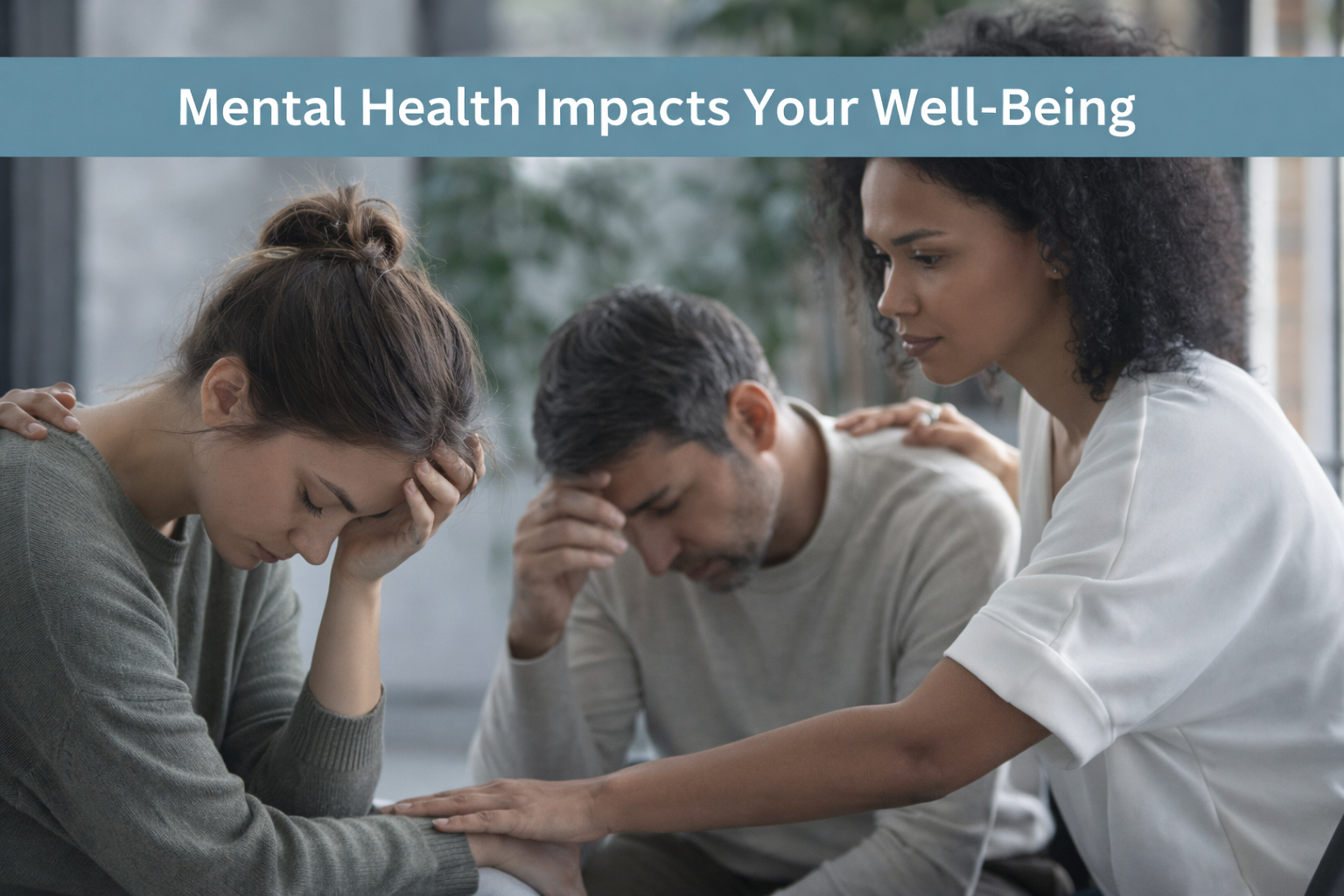
Most people don’t think much about mental health until something feels off. We notice when our body hurts, but the mind is easier to ignore. Understanding the impact of mental health shows how deeply it shapes our work, relationships, rest, and everyday experiences.
When mental health feels steady, life feels easier to handle. When it doesn’t, even small things can feel heavy. That’s why mental health matters. Not as a trend or a topic, but as part of everyday life.

What Mental Health Really Is
Mental health is not only about serious conditions or mental illness. It’s about how you feel on a regular day. How you handle stress. How you react when plans change. How you talk to yourself when things don’t go well.
It shows patience, focus, and energy. It affects how close you feel to others. While mental illness can be part of the picture for some people, mental health struggles often appear in quieter ways. People may feel tired, disconnected, or overwhelmed without knowing exactly why.
The Mind Affects the Body
The body and mind are connected. When stress builds up, the body feels like it. Headaches, stomach problems, tight muscles, and poor sleep are common signs. They are not random. They are signals.
Ignoring mental health doesn’t make these signals go away. Paying attention to it often helps both the mind and the body feel more balanced.
How Mental Health Shapes Daily Life
Good mental health helps people show up for their day. It supports focus, follow-through, and communication. When mental health is low, concentration slips and motivation drops. Tasks feel harder than they should. Relationships can feel strained.
This can lead to frustration and self-doubt. Over time, it affects the quality of life. Supporting mental health helps daily life feel more stable and less drained.
Coping With Stress and Change
Life doesn’t slow down. Stress, loss, and change happen to everyone. Mental health affects how we move through those moments. Emotional strength doesn’t mean staying calm all the time. It means being able to pause, feel, and recover.
With the right support, people can learn ways to cope with that actually fit their lives. This makes challenges easier to manage over time.
Mental Health Is Ongoing Care
Mental health care isn’t only for crisis moments. It’s also about noticing patterns early. Talking things through. Making small adjustments before stress builds too high.
Ongoing care helps prevent burnout and supports long-term well-being. It’s not about fixing yourself. It’s about taking care of yourself.
Small Ways to Support Mental Health
You don’t need to change everything at once. Small steps matter.
- Stay in touch with people who feel safe to talk to
- Rest when you can, even briefly
- Slow down the mind with simple breathing or quiet moments
- Ask for professional help when things feel stuck
- Take care of sleep, movement, and meals
- Set limits when stress starts to take over
None of these are perfect. It’s practice.
Behavioral Health Support
Behavioral health services give people a place to talk and be understood. At our behavioral health practice in Connecticut, we support individuals dealing with many kinds of challenges. We offer therapy, counseling, and wellness support based on real needs, not labels.
The focus is on helping life feel more manageable, one step at a time.
A Simple Truth
Mental health affects how life feels from the inside. When it’s supported, people often feel more grounded and capable. At Waterview Behavioral Health, we believe mental health care is part of caring for the whole person. We offer a range of services including therapy, counseling, and wellness programs to support different mental health needs, with care that is compassionate, thoughtful, and based on real evidence.
If you’d like support or more information, please reach out. Taking care of your mental health is not a weakness. It’s part of living well.
Frequently Asked Questions
Because how you feel on the inside affects everything else. Even on “normal” days. When mental health is ignored, stress piles up quietly.
You might feel worn out, short-tempered, or unfocused. Sleep might feel off. You may pull back from people without meaning to. These are common signs.
Yes. It happens to a lot of people. Stress doesn’t always come from one big thing. It builds slowly over time.
No. Many people reach out just to talk, understand themselves better, or feel less weighed down. Help isn’t only for emergencies.
Not ignoring how you feel. Resting when you can. Saying something out loud instead of holding it in. Small steps count.