
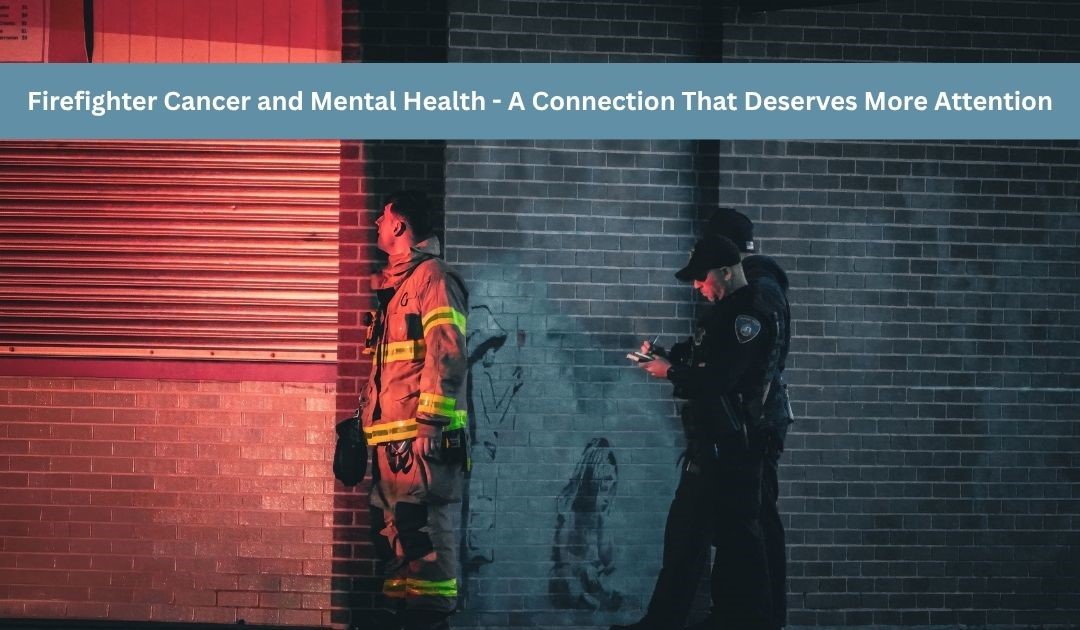
Firefighters face significantly elevated cancer rates from occupational carcinogen exposure, and a cancer diagnosis in this population often triggers anger, grief, and moral injury layered on top of pre-existing occupational trauma – which is why effective support has to address both the medical and psychological pictures together.
An Overlooked Intersection
The mental health literature on first responders focuses primarily on psychological trauma. Less attention has been paid to the intersection of occupational health concerns – particularly occupational cancer risk – and mental health in the fire service. That intersection is clinically significant and increasingly documented.
The Occupational Cancer Burden
Firefighters face cancer rates substantially above the general population. A landmark 2015 study published in Occupational and Environmental Medicine, analyzing data from the National Institute for Occupational Safety and Health (NIOSH), found that firefighters had a 9 percent higher rate of cancer diagnosis and a 14 percent higher rate of cancer deaths compared to the general population. Specific cancers – including mesothelioma, non-Hodgkin’s lymphoma, bladder cancer, and testicular cancer – showed particularly elevated rates.
The mechanisms include exposure to carcinogens in smoke, diesel exhaust in station environments, contaminated turnout gear, and other occupational exposures that accumulate over a career. The fire service has responded with increased attention to decontamination protocols and gear-cleaning standards. The psychological burden of cancer risk and diagnosis in this population, however, is a separate problem that receives far less systematic attention.

What the Mental Health Intersection Looks Like
A firefighter receiving a cancer diagnosis faces a clinical picture distinct from a general-population cancer patient in several respects. There is often explicit awareness that the diagnosis is occupationally caused – that the cancer is a cost of the career, not random misfortune. This attributional framing is associated with higher levels of anger, grief about the occupational decision, and moral injury related to institutional failure to adequately protect personnel.
Research on cancer and mental health in general populations documents significantly elevated rates of depression, anxiety, and PTSD-spectrum presentations following diagnosis – rates that are compounded by prior occupational trauma in firefighters who already carry significant cumulative exposure. A thorough biopsychosocial assessment is often the starting point for untangling how a medical diagnosis, occupational trauma history, and identity disruption interact.
What Effective Support Looks Like
First responders navigating cancer alongside occupational trauma benefit from clinical support that understands both dimensions – not standard cancer support programming that ignores occupational context, and not first responder mental health programming that ignores the medical picture.
Mission Reset at Waterview accepts firefighters and other first responders regardless of whether they are actively on duty, as part of our first responder IOP program in Connecticut. The clinical assessment process includes medical history as a component of the full biopsychosocial picture, alongside structured, evidence-based formats such as PTSD-focused intensive outpatient treatment.
Ready to Take the Next Step?
The sooner you get help, the sooner healing begins. Talk to our team now.
Get Help Now!Frequently Asked Questions
Cumulative exposure to carcinogens in smoke, diesel exhaust, and contaminated gear over a career raises cancer risk well above general-population rates, according to NIOSH-backed research.
Yes. The combination of occupationally-caused illness, prior trauma exposure, and identity disruption can produce depression, anxiety, and PTSD-spectrum symptoms beyond what’s typical in general cancer patients.
It refers to the distress that comes from believing an institution failed to adequately protect personnel from preventable occupational exposure, layered on top of the illness itself.
Programs designed for this population, including Mission Reset at Waterview’s first responder services, build medical history into the same clinical assessment as occupational and psychological trauma history.
No. Programs built for this population, such as Mission Reset, accept firefighters whether they are actively working or not.
Sources: Daniels et al., Occupational and Environmental Medicine (2015); National Institute for Occupational Safety and Health (NIOSH), CDC.