
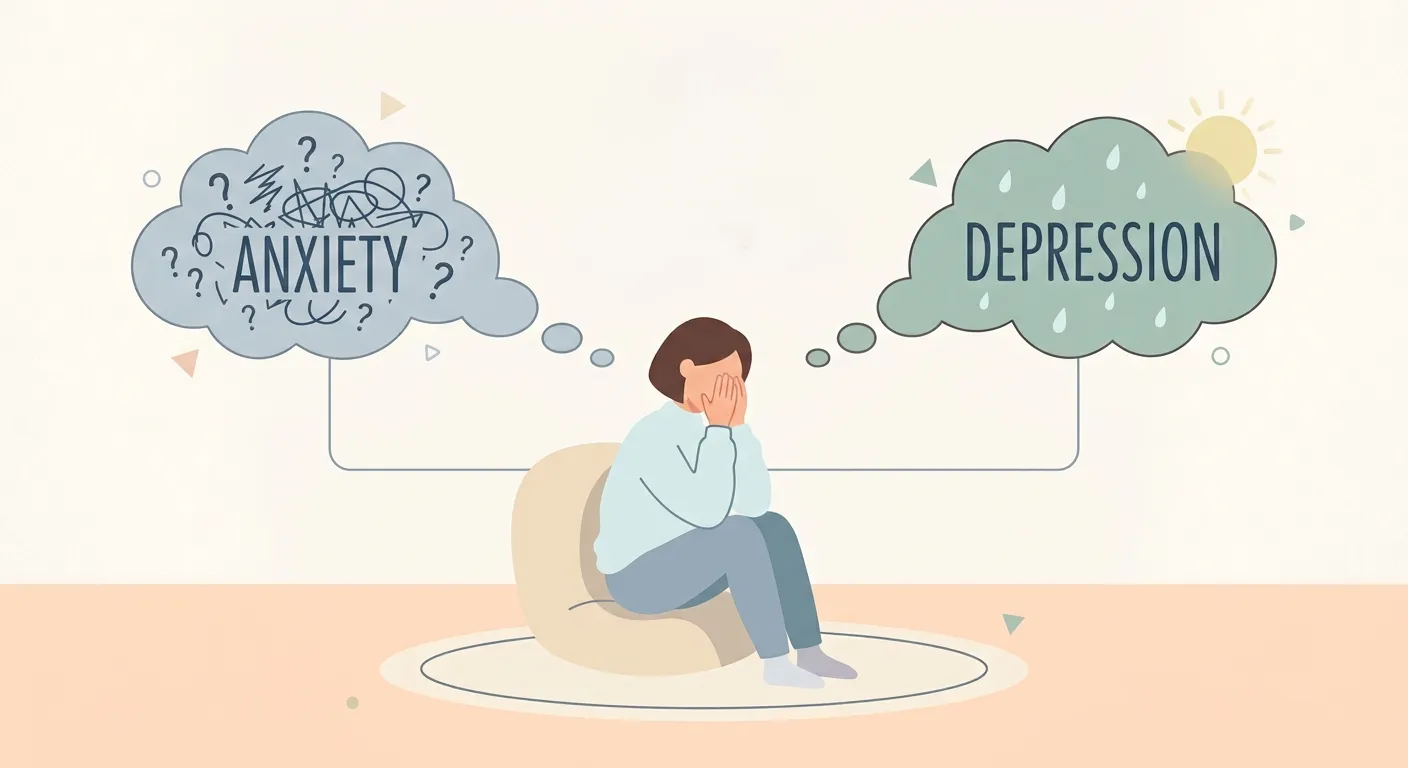
Anxiety and depression are not the same thing, even though they often show up together. Anxiety fills your body with fear and worry about what might happen. Depression pulls energy and hope out of you about what already is. Knowing which one you’re facing (or if it’s both) is the first step toward real help.
Here’s the thing. You don’t need a medical degree to notice the difference. You just need the right words for what’s going on inside you.
Anxiety vs. Depression: What’s the Difference?
Anxiety is a future problem. Your brain keeps asking “what if” – what if I fail, what if they’re mad at me, what if something bad happens. Your heart races. Your chest gets tight. You can’t sit still.
Depression is a past-and-present problem. It’s heavy. It’s flat. Things you used to love just feel gray now. You’re not scared of the future – you just don’t feel much of anything about it.
Some people get one. Some get both. I’ve heard people describe anxiety as “static in my head that never turns off,” and depression as “walking through wet sand.” Those two feelings are not the same, even on a bad day.
Common Symptoms of Anxiety
- A racing heart, even when nothing’s happening
- Trouble sleeping because your brain won’t shut off
- Sweaty palms, shaky hands, an upset stomach
- Avoiding things – school, parties, phone calls – because they feel too big
- Constant worry that doesn’t match the actual situation
Common Symptoms of Depression
- Losing interest in things you used to enjoy
- Sleeping too much or barely at all
- Feeling tired all the time, even after rest
- Trouble focusing on homework, work, or conversations
- A heavy sadness, or sometimes just numbness
How Anxiety and Depression Can Look Similar
Both can wreck your sleep. Both can make you irritable. Both can leave you exhausted, staring at your ceiling at 2 a.m., wondering what’s wrong with you. Both can make it hard to concentrate at work or in everyday tasks.
And both can hide behind a smile. Someone can be laughing with coworkers and falling apart alone an hour later. That’s not rare. That’s actually pretty common, which is exactly why mood disorders get missed, even by close friends, family, and doctors.
Can You Have Anxiety and Depression at the Same Time?
Yes. More than half of people diagnosed with depression also meet the criteria for an anxiety disorder, according to the Anxiety and Depression Association of America. This combo even has a name – some clinicians call it “anxious depression.”
Picture it like this: depression drains your gas tank, and anxiety keeps your foot on the gas anyway. You’re running on empty and racing at the same time. Exhausting doesn’t begin to cover it.

When Anxiety or Depression Starts Affecting Daily Life
A rough week is normal. Everybody has one. But when the worry or the sadness starts running through your schedule – skipping school, dodging friends, missing meals, snapping at people you love – that’s a signal, not a phase.
Ask yourself: has this lasted more than two weeks? Is it getting in the way of sleep, work, or relationships? If yes, it’s time to talk to someone. A friend, a therapist, a doctor. Anyone you trust.
Treatment Options for Anxiety and Depression
Treatment isn’t one-size-fits-all. Some people do well with:
- Talk therapy (like CBT, which teaches you to challenge unhelpful thoughts)
- Medication management with a psychiatrist or nurse practitioner
- Lifestyle changes – sleep, movement, cutting back on caffeine
- Support groups where you meet people who actually get it
- A mix of the above, adjusted over time
There’s no shame in trying more than one approach. Brains are complicated. Treatment plans should be too.
When Weekly Therapy May Not Be Enough
Weekly therapy works great for a lot of people. But sometimes it’s not enough – and that’s not a failure on your part. If symptoms keep getting worse despite regular sessions, or if daily life feels unmanageable, a higher level of care might be the right move.
This is common with tough or co-occurring conditions, where anxiety, depression, and other struggles feed off each other.
How Structured Outpatient Treatment Can Help
Structured programs give you more support without pulling you out of your whole life. An intensive outpatient program usually means several hours of treatment a few days a week, while you still live at home and keep up with work and daily responsibilities.
For people who need even more support, a partial hospitalization program offers a full day of structured care – therapy, skill-building, medical support – without an overnight stay. Programs also often include help for families, since anxiety and depression rarely affect just one person in a household.
When to Seek Immediate Help
Some signs mean don’t wait. Call for help right away if someone is talking about suicide, giving away belongings, or seems to have a plan to hurt themselves. In the U.S., you can call or text 988 to reach the Suicide and Crisis Lifeline, any hour, any day.
You can also check the National Institute of Mental Health for more on symptoms and what treatment actually looks like. If you or someone you know is struggling, reaching out isn’t weak. It’s the smartest move you can make. Start by exploring admissions or browsing available resources to find the right next step.
Ready to Take the Next Step?
The sooner you get help, the sooner healing begins. Talk to our team now.
Get Help Now!Frequently Asked Questions
Yes, it can. Long-term anxiety wears a person down, and that exhaustion can slide into depression over time. That’s one reason early treatment matters so much.
Anxiety centers on fear and worry about the future. Depression centers on sadness, numbness, or loss of interest in the present. That’s the clearest line between them.
Yes, very normal. Research shows a large share of people with depression also have an anxiety disorder, and treating both together often works better than treating just one.
Most clinicians look at symptoms lasting two weeks or longer, especially if they’re getting in the way of school, work, sleep, or relationships.
Yes. A lot of adults chalk up their symptoms to “stress” or “being tired” for months, or even years, before they connect the dots. That’s why it helps to know the specific signs of each condition.