
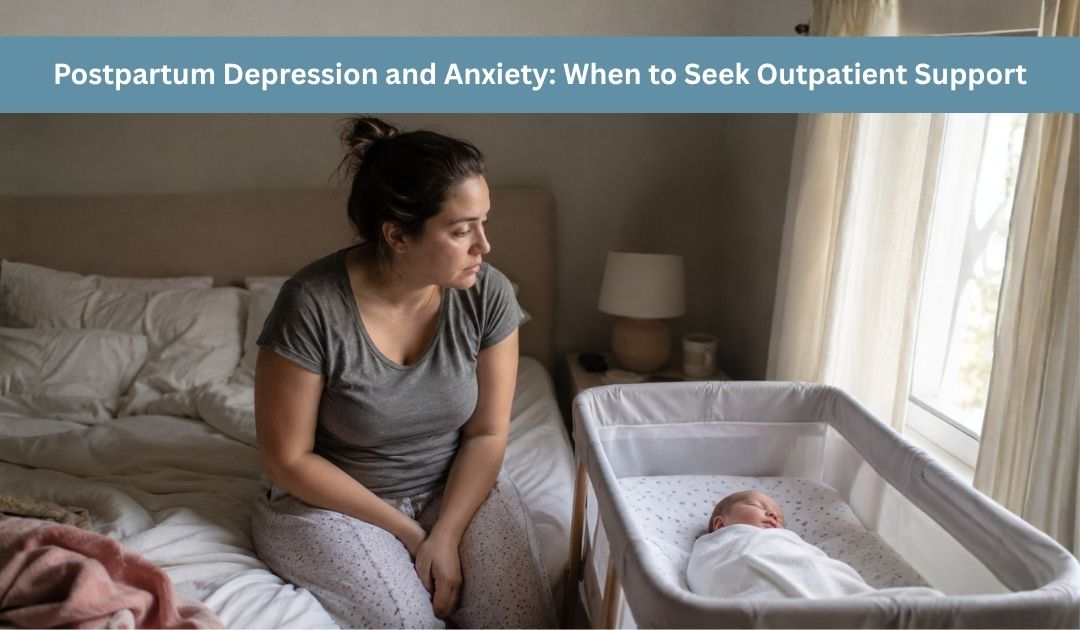
Postpartum depression and postpartum anxiety are treatable medical conditions, not a personal failing, and they can surface any time in the first year after childbirth. They go beyond the two-week window of the “baby blues,” showing up instead as persistent sadness, dread, or a sense of disconnection from your baby that doesn’t lift on its own. If symptoms last longer than two weeks, interfere with basic daily functioning, or include panic, intrusive thoughts, or thoughts of self-harm, outpatient care is the right next step – and it works.
Outpatient treatment covers everything from weekly talk therapy to a structured Intensive Outpatient Program (IOP), and it lets a new mother get real clinical support while still sleeping in her own bed and caring for her baby. This guide breaks down what postpartum depression and anxiety actually look like, the warning signs that mean it’s time to get help, and what outpatient treatment involves.
What Postpartum Depression and Anxiety Actually Look Like
Postpartum depression (PPD) and postpartum anxiety (PPA) are separate diagnoses that frequently overlap. The CDC estimates that about 1 in 8 women report symptoms of depression after giving birth, and many of those women also meet criteria for an anxiety disorder. Symptoms don’t always look like textbook sadness – they can show up as:
- Crying more than usual, or feeling numb and unable to cry at all
- Racing, repetitive worry about the baby’s health or safety
- Irritability or anger that feels out of proportion
- Trouble sleeping even when the baby is sleeping
- Feeling distant from the baby, or guilt about not feeling “bonded”
- Racing thoughts, muscle tension, or a constant sense of dread (common in postpartum anxiety)
Left unaddressed, these symptoms tend to compound. Sleep loss worsens anxiety, anxiety worsens sleep, and the cycle can quietly stretch on for months.
Baby Blues vs. Postpartum Depression vs. Postpartum Anxiety
The “baby blues” affect up to 80% of new mothers and usually resolve within two weeks without treatment – they’re a hormonal adjustment, not a diagnosis. Postpartum depression is longer-lasting and more severe, often involving hopelessness, loss of interest in things that used to matter, and difficulty functioning. Postpartum anxiety, meanwhile, centers on excessive worry, physical tension, and sometimes panic attacks, and it can occur with or without depression. Knowing which one (or which combination) you’re dealing with matters, because it shapes the treatment plan.
Signs It’s Time for Outpatient Support
“Just push through it” is common advice new mothers give themselves – and it’s usually the wrong call. Consider outpatient support if you notice:
- Symptoms that have lasted longer than two weeks
- Trouble completing basic daily tasks – feeding yourself, showering, caring for the baby
- Withdrawing from your partner, family, or friends
- Panic attacks, intrusive or scary thoughts, or obsessive worry about harm coming to the baby
- Any thought of harming yourself or your baby – this warrants immediate help, including the 988 Suicide & Crisis Lifeline
Reaching out at the first sign of these patterns, rather than waiting for a crisis, generally means a shorter, less intensive course of treatment.
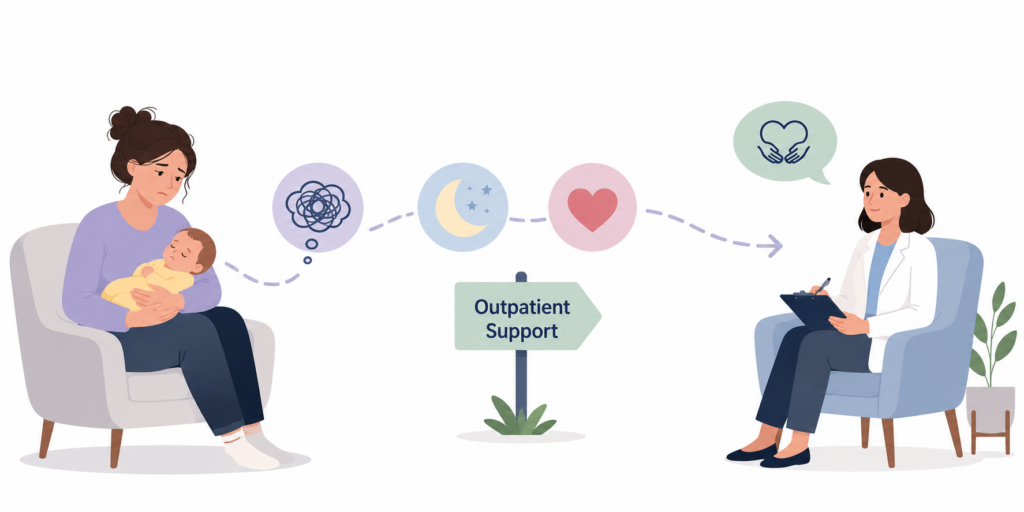
What Outpatient Treatment Actually Involves
Outpatient care for PPD and PPA is not one-size-fits-all. A typical plan may combine:
- Individual therapy – weekly one-on-one sessions using approaches like CBT or interpersonal therapy to work through mood, guilt, and identity shifts. See individual therapy for what a typical session looks like.
- Medication management – a prescriber evaluates whether an antidepressant or anti-anxiety medication is appropriate, including options considered safe while breastfeeding.
- Group therapy – connecting with other mothers going through the same thing reduces the isolation that often makes postpartum symptoms worse.
- Intensive Outpatient Programs (IOP) – several hours of structured care a few days a week for mothers whose symptoms need more support than weekly therapy alone, without an inpatient stay.
When an IOP Makes More Sense Than Weekly Therapy
An Intensive Outpatient Program is worth considering when symptoms are disrupting daily life but don’t require round-the-clock care. IOP typically means several hours of group and individual work, several days a week, while you go home to your baby every night. It gives mothers more clinical contact and structure than a single weekly session can offer, and it’s often the bridge between “I’m struggling” and “I need to be hospitalized” – catching things before they escalate that far.
Getting Started
If any of this sounds familiar, the first move is a conversation with a provider who understands perinatal mental health. Waterview Behavioral Health’s admissions process starts with a confidential assessment to match you with the right level of care, whether that’s individual therapy, group support, or a full IOP schedule. Postpartum Support International also maintains a free helpline and provider directory if you want to talk to someone today while you sort out next steps.
Frequently Asked Questions
Untreated PPD can last well beyond the first year after birth – some studies show symptoms persisting into a child’s second or third year. With treatment, most mothers see meaningful improvement within weeks to a few months.
Yes. Postpartum anxiety is at least as common as postpartum depression, and the two frequently occur together. Anxiety symptoms are sometimes missed because they don’t match the stereotype of postpartum depression as pure sadness.
Regular outpatient therapy is typically one session a week. An IOP involves multiple sessions across several days each week, combining individual and group formats, for mothers who need more structure than weekly therapy but don’t require inpatient care.
In most cases, yes. Many antidepressants and therapy approaches are compatible with breastfeeding; a prescriber will review your specific situation and medication options with you directly.
Most insurance plans cover outpatient mental health treatment, including therapy, medication management, and IOP care, though coverage details vary by plan. Reach out through the admissions process linked above to verify your specific benefits before starting treatment.
Sources:
- Centers for Disease Control and Prevention. “Symptoms of Depression Among Women.” cdc.gov/reproductive-health/depression
- Postpartum Support International. “Help for Moms.” postpartum.net