
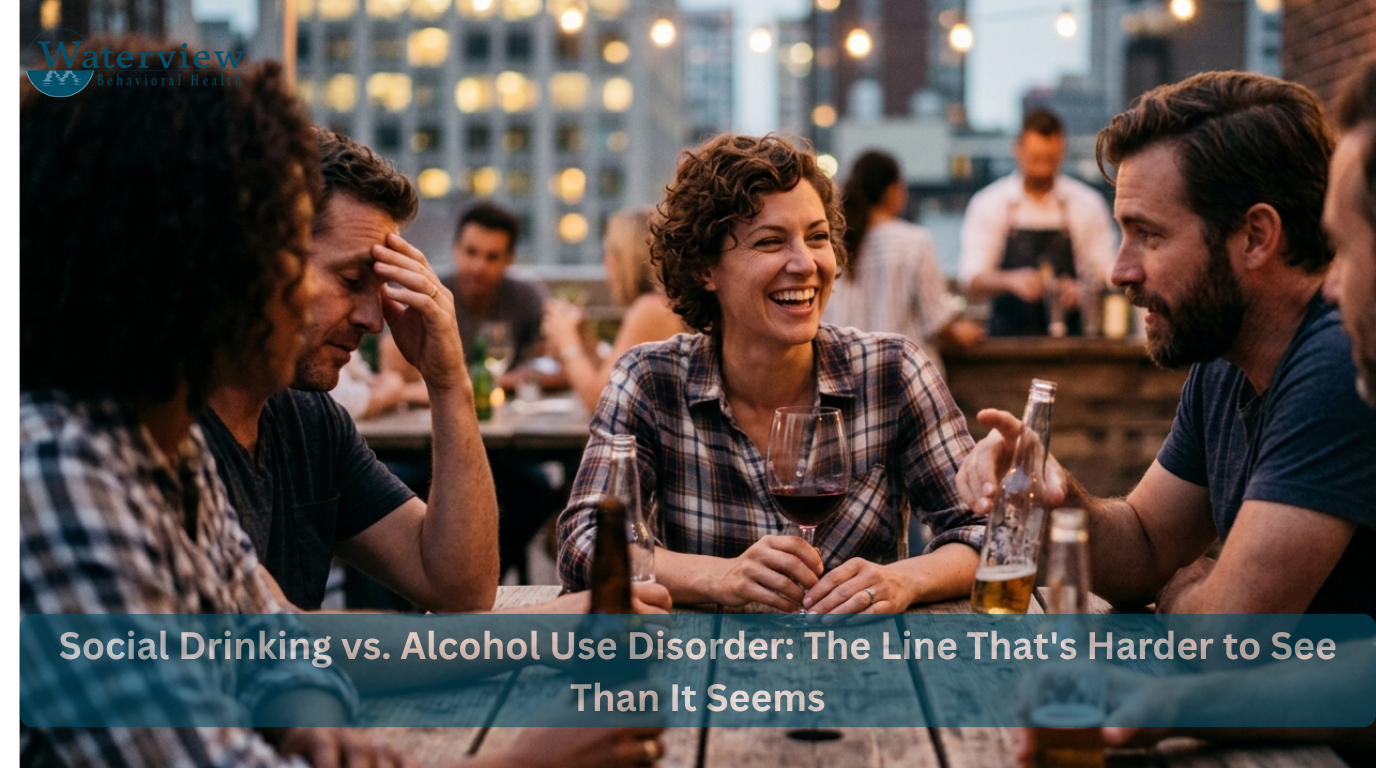
Let’s start with the obvious part: most adults who drink do so socially, and there’s nothing disordered about it. That’s worth saying plainly, because it’s easy for a piece like this to make people second-guess a totally normal glass of wine at dinner. Having wine with a meal or a couple beers at a weekend get-together doesn’t put someone in alcohol use disorder territory. Honestly, the real question isn’t what the drinking looks like from the outside. It’s what the relationship with alcohol is actually doing on the inside.
Here’s the thing that makes this tricky, though. Drinking is so normalized in the U.S. that it shows up everywhere, business dinners, sporting events, family holidays, basically every kind of adult celebration you can think of. And when something is that woven into everyday life, the baseline gets distorted. Patterns that might raise an eyebrow in a more sober frame of reference just blend in. Nobody notices, including the person doing the drinking.
What actually separates disorder from a normal night out
This isn’t primarily about how much someone drinks. It’s about control, consequences, and compulsion. There’s a real difference between someone who can have two drinks and genuinely stop there, who isn’t thinking about their next drink when they’re not drinking, who doesn’t need alcohol to feel at ease in social settings, and who isn’t dealing with fallout in any part of their life because of it, versus someone who keeps finding they’ve had more than they meant to, who’s quietly planning their schedule around when they’ll get to drink, or who starts feeling irritable or on edge if they haven’t had a drink by a certain point in the day.
If you want one question that cuts through most of the noise, it’s this: when did drinking change from something I do into something I need? That shift, the need, the relief, the sense that something’s missing without it, is really the signal worth paying attention to.

Why tolerance makes this shift so easy to miss
Tolerance is a big part of why this transition can happen so gradually that nobody clocks it in real time. As the body adjusts to regular drinking, the same amount just doesn’t hit the same way anymore. So the person drinks a little more to feel what they used to feel, and it happens slowly enough that it doesn’t register as an escalation. By the time they notice how much they’re actually drinking, it can feel completely normal, like that’s just what it takes. But what’s really going on is a physiological shift in how their body responds to alcohol, not a personal quirk or a matter of willpower.
So what do you actually do with this?
If the question “do I have a problem with drinking?” keeps coming up, even quietly, even occasionally, that’s worth taking seriously. This isn’t about running through a checklist or slapping a label on it. It’s about being honest with yourself about what might need to change, and what that change would actually mean for your life. Talking to a clinician doesn’t mean committing to treatment. It just means getting an honest, outside perspective, and that’s a reasonable, low-stakes place to start.
Ready to Take the Next Step?
Acute symptoms don’t wait, and you don’t need to face them alone. Our team provides timely, evidence-based care to help you regain stability and move forward with confidence.
Frequently Asked Questions
How is alcohol use disorder different from social drinking?
Honestly, it comes down to control, not quantity. Someone drinking socially can take it or leave it. With alcohol use disorder, there’s a compulsion involved, a felt need for alcohol, and drinking starts causing consequences in relationships, work, or health over time.
Can someone drink every day and not havealcoholuse disorder?
It’s possible, but it’s worth paying attention to. Frequency alone isn’t the whole picture. What matters more is whether that daily drink feels optional or necessary, and whether skipping it causes irritability, anxiety, or a strong urge to drink anyway.
What role does tolerance play in developing a drinking problem?
Tolerance sneaks up on people. As the body adjusts, the same amount stops producing the same effect, so someone drinks more to feel it. That gradual increase often goes unnoticed, which is exactly why it can mask a real shift underneath.
Is it normal to think about drinking whenyou’renot drinking?
Occasional thoughts about an upcoming happy hour aren’t unusual. But if drinking is on your mind often, if you’re planning your day around it, or feeling anxious without it, that pattern is worth taking seriously and talking through with someone.
Do I need to commit to treatment just to ask for help?
Not at all. Talking to a clinician doesn’t mean signing up for treatment right away. It’s simply an honest, low-stakes conversation to get an outside perspective on your relationship with alcohol, and figure out what, if anything, should change next.