
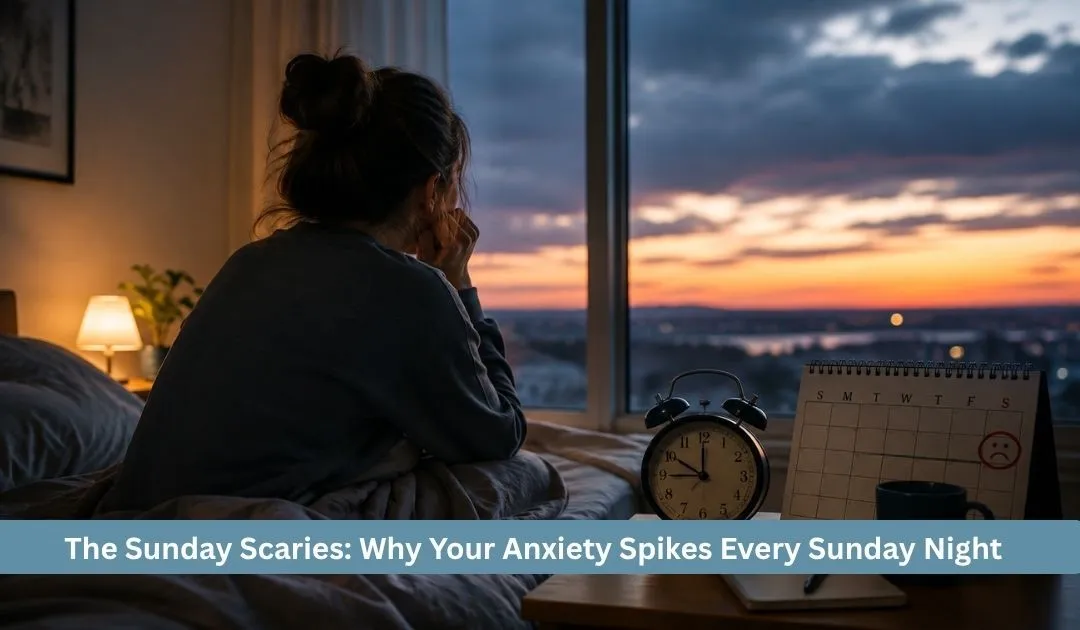
The Sunday Scaries are real. They’re a form of anticipatory anxiety, a stress response that shows up before a dreaded event even starts. Your brain isn’t waiting for Monday to actually arrive. It starts rehearsing the stress hours, sometimes a full day, ahead of time. For most people, this fades once the workweek gets going. But if the dread shows up every single week, disrupts your sleep, or bleeds into your whole weekend, it may be pointing to something bigger than a bad case of the Mondays.
I’ve heard people describe it the same way, over and over. A tight chest that shows up around 4 p.m. on Sunday. A stomach that won’t settle. A mental list of everything wrong with work, replaying on a loop while everyone else is enjoying dinner. It’s oddly consistent, and it’s more common than most people realize.
What’s Actually Happening in Your Brain
Anticipatory anxiety is your nervous system reacting to a future threat. It reacts as if the threat is happening right now. Your body can’t always tell the difference between “I’m worried about Monday” and “Monday is actually here.” So it releases the same stress hormones either way. Cortisol rises. Your heart rate ticks up. Your thoughts start racing toward everything that could go wrong.
Sunday adds a second layer to this. As the weekend winds down, so does the sense of freedom that came with it. Unstructured time is ending. Structure, deadlines, and obligation are about to take its place. That shift alone is enough to trigger a stress response, even before you think about a single work task.
This pattern falls under the same umbrella as generalized anxiety and other stress-related conditions we see often. Occasional Sunday dread is common. A weekly pattern that won’t let up is worth paying attention to.
Why It Hits Some People Harder Than Others
Not everyone gets the Sunday Scaries, and that’s not a coincidence. People with high-pressure jobs, unpredictable schedules, or a boss they can’t read tend to feel it more. So do people who already carry a baseline level of anxiety through the week. The weekend doesn’t erase that anxiety. It just quiets it down for a couple of days.
Perfectionism plays a role too. If your mind runs through worst-case scenarios by default, an empty Sunday afternoon gives it plenty of room to do that. There’s less to distract you, so old worries and looping thoughts have space to grow louder.
People managing a mood-related condition often notice this pattern gets worse on Sundays. The shift from rest back to routine tends to bring whatever’s under the surface right up to the top.
The Physical Side Nobody Talks About
Anxiety isn’t just a mental experience. It shows up in the body too, and Sunday night is a common time for it to surface. A racing heart. Tight shoulders. A stomach that feels like it’s in knots. Trouble falling asleep, even though you’re exhausted. Some people notice a headache creeping in by evening, or a wave of nausea they can’t explain.
These physical symptoms are your nervous system’s fight-or-flight response, triggered by a threat that’s still hours or days away. Your body is bracing for impact before impact ever happens. Over time, that constant bracing takes a toll, especially if it’s happening every single week without a break.
If physical symptoms like this show up with racing thoughts, it’s often part of a bigger pattern. We treat this through personalized one-on-one therapy sessions, where a clinician helps you find what’s really driving it.

When It’s More Than Just “The Mondays”
There’s a real difference between mild Sunday dread and something that needs professional attention. Mild dread fades once you’re back at work and settled into your routine. It doesn’t stop you from enjoying your weekend, and it doesn’t follow you into unrelated parts of your life.
Something bigger is going on if the anxiety starts creeping into Saturday too. Or if you can’t relax at all during your time off because you’re already thinking about Monday. Or if the dread comes with panic symptoms, like a racing heart that won’t calm down, or thoughts that spiral out of your control.
This kind of pattern often overlaps with trauma-related stress responses. That’s often true for people whose job has included conflict, chaos, or a truly toxic boss. The dread isn’t really about Monday. It’s about what Monday represents.
Why Self-Help Tips Only Go So Far
Search “how to stop Sunday anxiety” and you’ll find the usual list. Meal prep on Saturday. Go to bed earlier. Try a digital detox. These tips help some people, some of the time. But they don’t address what’s underneath a pattern that’s been building for months or years.
If you’ve tried the standard advice and the dread keeps coming back like clockwork, that’s useful information. It usually means the anxiety isn’t about time management. It’s not about a messy inbox either. It’s a signal from a nervous system that’s stuck in a stress loop, and breaking that loop usually takes more than a better bedtime routine.
Structured support, like an intensive outpatient program, gives people tools that go beyond quick fixes. It’s a level of care built for people whose anxiety is disrupting daily life but who don’t need to step away from work, school, or family to get real help.
The Ripple Effect on Relationships
Sunday Scaries rarely stay contained to one person. A partner notices the mood shift every week and starts walking on eggshells by Sunday afternoon. Kids pick up on tension even when nobody says a word about it. Plans get canceled because “I just need to get my head right for tomorrow.”
Over time, this ripple effect can quietly reshape a household’s rhythm around one person’s dread. Families often don’t see how much they’ve adjusted. Not until someone outside the situation lays it out plainly. That’s part of why family-focused support and education such a valuable piece of treatment is. It gives everyone in the house language for what’s happening and a plan for handling it together.
Getting Help Without Blowing Up Your Life
One of the biggest reasons people put off getting help for anxiety like this is fear of disruption. Nobody wants to take a leave of absence or explain a long gap to their employer. The good news is that isn’t usually necessary.
Outpatient care is designed to work around real schedules. Evening groups. Flexible session times. Coordinated care. All of it means you can get real support without stepping away from your job or your family. Most people considering this route also want a clear answer on cost before they commit to anything. A quick look at insurance coverage and payment options usually clears that up fast. Most plans cover at least some outpatient mental health care.
The Bottom Line
A little Sunday dread is normal. Almost everyone feels it once in a while. But when it shows up like clockwork every single week, steals your Saturday too, or comes with physical symptoms you can’t shake, it’s worth taking seriously. That pattern is your nervous system asking for a change, not just a better Sunday routine.
If this sounds familiar, our team at Waterview Behavioral Health can help you figure out what’s really driving it. Reach out through our contact page to talk with someone who understands exactly what this cycle feels like, and how to actually break it.
Ready to Take the Next Step?
The sooner you get help, the sooner healing begins. Talk to our team now.
Get Help Now!Frequently Asked Questions
Yes. It’s commonly called anticipatory anxiety. It’s a well-documented stress response to something coming up, in this case, the start of the workweek. Your body releases stress hormones in advance, which is why the dread can feel just as intense as the event itself.
Small changes help, like planning something enjoyable for Sunday evening or prepping a few things ahead of time so Monday feels less chaotic. But if the dread is intense or happens every week without fail, it’s worth looking at what’s driving it rather than just managing the symptom.
They can be, especially if the dread is constant, disrupts your sleep, or spreads into other days of your week. A pattern that severe, that consistent, is worth a real conversation with a mental health professional. It’s not just normal stress at that point.
Anticipatory anxiety is fear or dread about something before it happens. It causes the same stress response as the real event: racing heart, tense muscles, racing thoughts. All before anything has actually gone wrong.