
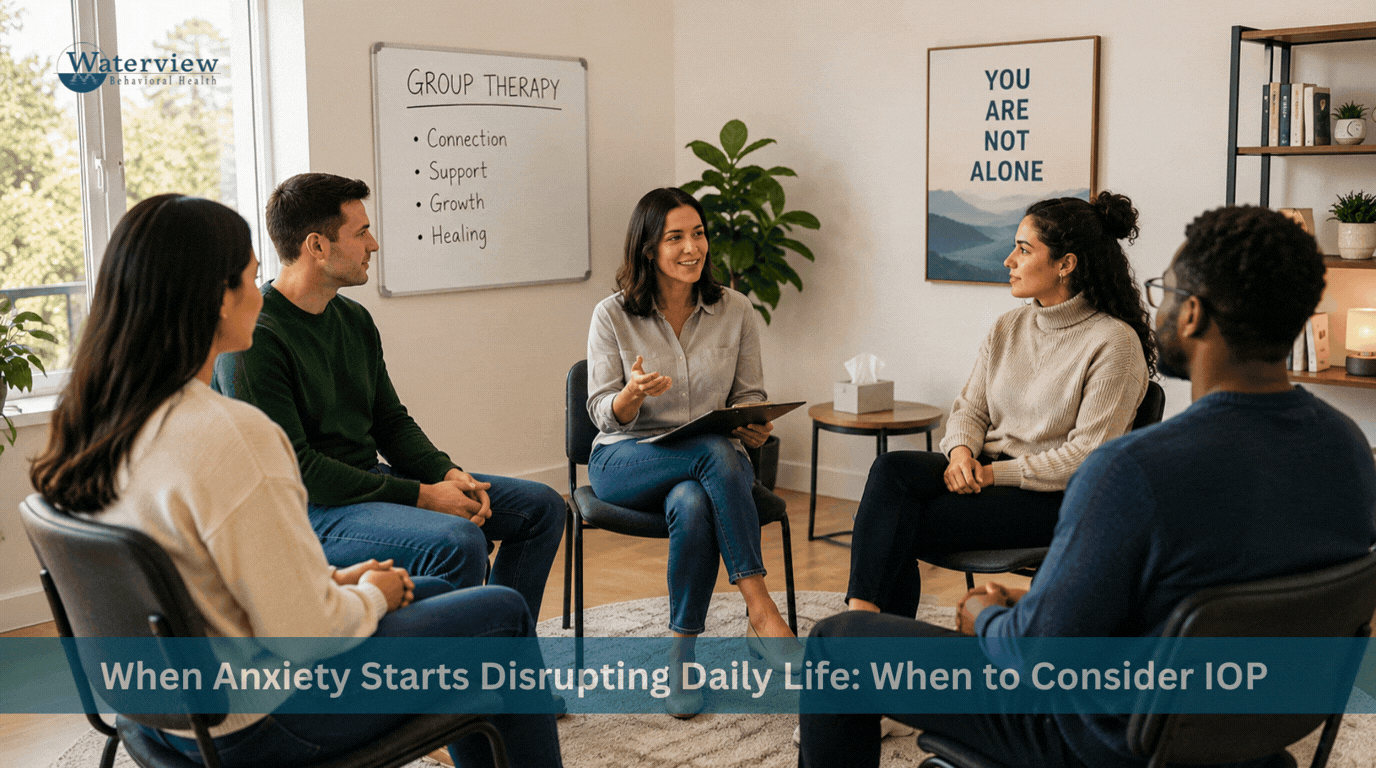
Let’s be real for a second. If you’re looking into an intensive outpatient program, group therapy is probably the one part of the whole thing that’s making you a little nervous. What am I even supposed to say in there? Who’s going to be sitting next to me? Is this going to turn into some awkward moment where I’m expected to spill my whole life story to a room full of strangers?
That worry is completely fair, by the way. Most people have sat through individual therapy at some point, maybe talked to a psychiatrist about medication, or brought something up with their primary care doctor. But sitting in an actual structured clinical group? A lot fewer people have done that. So it makes sense that, without anyone explaining it, group therapy can sound vague, exposing, or just plain uncomfortable in your head.
But here’s the thing. In a well-run IOP, it’s really not like that at all. Group therapy is a clinician-facilitated treatment, with real goals and real boundaries, not some free-for-all where anything goes. And it sits at the center of IOP for a reason: it does things individual therapy alone just can’t fully do on its own. Connection. Accountability. Getting to practice real skills over and over. And honestly, learning from other people who are working through something pretty close to what you’re dealing with.
What Group Therapy Actually Looks Like in an IOP
Group therapy in an IOP isn’t just people sitting in a circle taking turns talking about their week. It’s a structured setting, run by trained clinicians, and every group is built around a specific clinical purpose. That could mean building coping skills, working on emotional regulation, noticing patterns in thinking and behavior, getting better at communication, lowering the risk of relapse, or building routines that actually hold up day to day.
The format shifts depending on the group. A cognitive behavioral therapy group might spend its time catching unhelpful thoughts and practicing more balanced ways to respond to them. A dialectical behavior therapy skills group might dig into distress tolerance, mindfulness, interpersonal effectiveness, or emotion regulation. A relapse prevention group can help people name their triggers, strengthen the support system around them, and actually plan for the moments that tend to be high-risk. A process-oriented group leans more into how people relate to each other, and to themselves, in the room.
What holds all of it together is structure. The clinician runs the session, sets the tone, protects the space, and keeps things anchored to the point of the group. Nobody’s expected to perform. Nobody has to spill everything at once, or show up with all the right words ready to go. Participation can mean speaking up, sure, but it can just as easily mean listening closely, working through an exercise, responding to a prompt, practicing a skill, or just quietly noticing how someone else’s story sounds a lot like your own.
And that matters, because plenty of people walk into IOP assuming group means being pressured to share before they’re ready. That’s just not how it goes in a program that’s actually clinically sound. People are encouraged to engage at whatever pace supports their treatment, while their readiness, safety, and personal boundaries stay respected the whole way through.
Why Group Therapy Works
One of the most powerful things happening in group treatment is something clinicians call universality. Basically, realizing you’re not the only one going through this. Mental health and substance use struggles have a way of breeding shame and isolation. It’s so common to think you’re the only one who feels a certain way, reacts a certain way, or just can’t seem to shake a pattern you already know isn’t doing you any favors.
Hearing someone else describe that exact same thing chips away at that isolation in a way that reassurance from a therapist alone often can’t. A clinician can look you in the eye and say “you’re not alone,” and yeah, that helps. But actually sitting in a room with people who are doing the work right alongside you, whether that’s recovery, stabilization, or just emotional healing, makes that statement feel true instead of just something nice someone said to you.
Group therapy also opens up peer learning in a way nothing else really does. A clinician can teach a coping skill, walk through a relapse prevention plan, or introduce a new way of thinking about a hard situation. But in group, you also get to hear how other people are actually applying that stuff in their real lives. Someone might mention using a grounding technique in the middle of a hard conversation, or setting a boundary with a family member, or handling a rough week a little differently than they used to. Those small, real moments tend to make the clinical concepts click in a way no textbook explanation ever quite manages.
Accountability is a big piece of this too. IOP usually means multiple treatment contacts a week, so you’re not sitting around waiting seven days for the next check-in. You come back to a familiar setting, see people who are also putting in the work, and keep getting chances to reflect on what’s happened since the last time you were all together. That rhythm can be exactly what someone needs when weekly outpatient therapy just isn’t enough structure, but inpatient or residential care would honestly be more than what’s necessary.

The Role of Practice and Repetition
Skills stick when you actually get to practice them, over and over, in context, with support close by. Group therapy builds a setting where that’s possible. Learn something, talk it through, try it out in real life, and then come back and revisit it again.
Think about someone who learns about cognitive distortions in one session, notices one pop up during the week, and brings it back to group to talk through what happened. Or someone practicing communication skills in group before actually trying them out in a tough family conversation. Or a person working on relapse prevention who hears another group member mention a trigger they hadn’t even thought of, and uses that to strengthen their own plan.
This is a big part of why group-based IOP care can feel so different from traditional weekly outpatient therapy. The work doesn’t just stop when one conversation ends. It becomes part of an ongoing rhythm, one where there’s always room to come back, revise, and reinforce what you’re learning.
What the First Few Sessions Might Feel Like
It’s totally normal for those first few group sessions to feel a bit awkward. Everything’s new. The people around you are strangers. The unwritten rules of the group haven’t clicked yet. You might not know how much to say, how you’ll come across, or whether you’ll even relate to anyone else in the room.
That awkwardness usually eases up pretty naturally as the group becomes more familiar. Over time, most people start to pick up on the rhythm, notice the shared themes, and feel more comfortable speaking up. Some people jump right in from day one. Others start out just listening and slowly open up as trust builds. Both are perfectly normal ways for this to go.
A good clinical team pays close attention to how each person is doing with it. If someone’s struggling to participate, feeling overwhelmed, or not sure how group even fits into what they’re trying to accomplish, that’s something the treatment team can work through with them directly. Group therapy was never meant to be one-size-fits-all. It’s supposed to be guided by clinicians and responsive to whoever’s actually sitting in the room.
What IOP Group Therapy Is Not
IOP group therapy isn’t some informal support group, even though support is absolutely part of what it gives you. It’s not an encounter group either. Nobody’s pushed to share painful details before they’re ready, and nobody’s expected to claim progress they don’t actually feel or put on a show of wellness for everyone else’s benefit.
It’s also not meant to replace every other kind of care out there. Intensive outpatient treatment usually blends several pieces together, and depending on the program and the person’s needs, that might include group therapy, individual therapy, psychiatric support, medication management, family involvement, or care coordination.
Group therapy works best as one part of a bigger plan. For some people, group ends up being the most meaningful piece of the whole program. For others, individual sessions, psychiatric care, or family work matter just as much, if not more, at different points along the way. Honestly, a lot of the real value of IOP comes from the combination of all of it: structured programming, clinical oversight, peer connection, and continuity of care, all working together at once.
How Referring Providers Can Prepare Clients for Group
For therapists, physicians, discharge planners, and other referral partners, taking a few minutes to prep a client for group therapy can make the whole move into IOP so much smoother. Most clients aren’t hesitant because they don’t want to engage in treatment. They’re hesitant because they genuinely have no idea what group is actually going to be like.
A few simple things can go a long way here. Clients do better knowing upfront that IOP groups are clinician-facilitated and structured, not just some loose, unsupervised hangout. It also helps to explain that the other people in the room aren’t sitting there to judge them. They’re working through their own stuff, same as your client is. And it’s worth pointing out that clients stay in control of what they share and when, even while they’re being encouraged to actually participate.
Normalizing that early discomfort matters just as much. Feeling nervous before that first group session doesn’t mean the program’s a bad fit. Honestly, plenty of people who start out apprehensive end up valuing group the most out of everything, because it gives them something they hadn’t found anywhere else: steady support from people who actually understand the work from the inside.
How Waterview Behavioral Health Can Help
Waterview Behavioral Health provides intensive outpatient care for adults who need real structure while still staying connected to their everyday lives and their community. Whether someone’s stepping down from a higher level of care, or stepping up from traditional outpatient therapy, IOP can be that clinically appropriate middle ground. More structure than weekly therapy offers, without the restrictions that come with inpatient or residential treatment.
Group therapy sits right at the center of that structure. In Waterview’s IOP, group work helps people build skills, strengthen insight, ease isolation, and practice new ways of responding, all with real clinical guidance backing it up. The goal was never just to sit around and talk about problems. It’s to support real, lasting change through repeated, structured therapeutic work.
Waterview’s team works closely with referral partners to keep continuity of care intact and help figure out whether IOP is actually the right fit for a given client. When someone’s dealing with symptoms that need more support than weekly outpatient care can offer, a structured IOP can help build the stability, accountability, and clearer path forward they’re looking for.
Ready to Take the Next Step?
Acute symptoms don’t wait, and you don’t need to face them alone. Our team provides timely, evidence-based care to help you regain stability and move forward with confidence.
Frequently Asked Questions
Honestly, it’s nothing like just sitting around chatting. Each session’s led by a clinician and built around a real goal, like coping skills or relapse prevention. You can talk, listen, or just work through an exercise. Nobody expects you to have all the answers yet.
Nope, not even a little. You’re always in control of what you share and when you share it. Group therapy just meets you at whatever pace actually works for you, and your comfort and boundaries get respected the whole time, especially early on.
Because honestly, it does things individual therapy alone just can’t pull off. You get real connection, real accountability, and tons of chances to practice skills. With sessions happening multiple times a week, you’re not stuck waiting seven days between check-ins.
Totally, and it doesn’t mean the program’s wrong for you. So many people who walk in nervous end up loving group the most out of everything, because it hands them steady support from people who genuinely get what they’re going through.
Not even close, it’s just one piece of a bigger picture. IOP usually mixes group with individual therapy, psychiatric support, medication management, or family involvement too. Honestly, it’s the combination of all of it working together that makes treatment actually stick.