
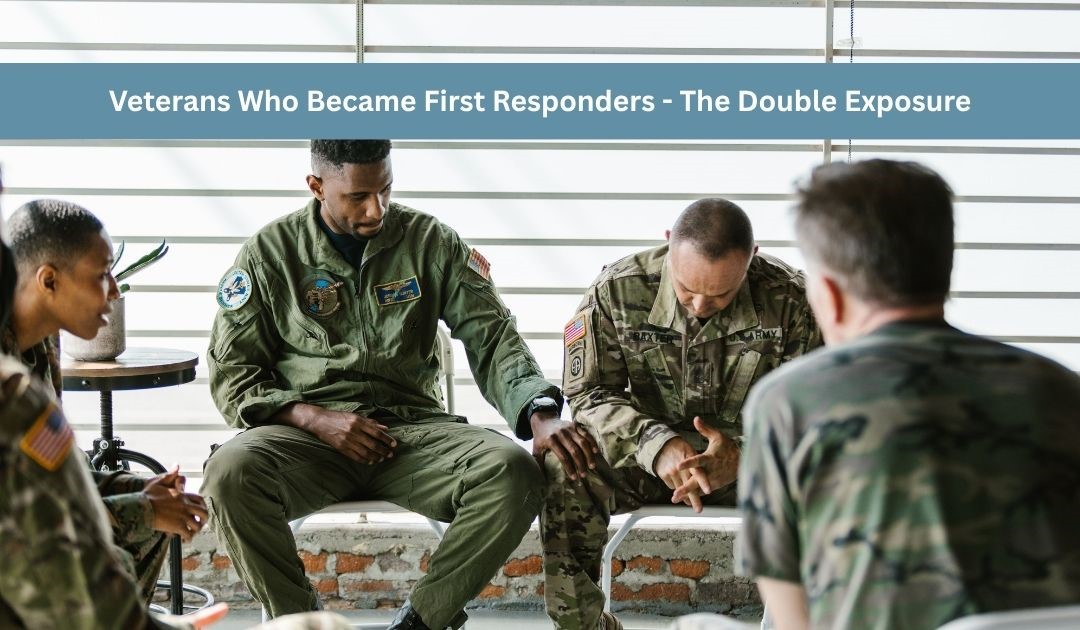
Veterans who become first responders carry two layered trauma histories – combat exposure and cumulative occupational trauma – and that overlap raises the risk of PTSD, compounds emotional strain, and demands treatment that addresses both careers together, not separately.
What Makes This Population Different
A significant share of police officers, firefighters, and EMS workers are also military veterans. Career-pathway research shows public safety professions draw heavily from the veteran community; shared values around service, structure, and high-stakes work create a natural pipeline from military service into first responder careers.
The clinical picture for this group – sometimes described through the lens of dual occupational identity and cumulative trauma exposure – is one the mental health field is still building research capacity to address. The short version: the exposure is cumulative, the risk is compounded, and effective trauma-informed care requires understanding both contexts.
What the Double Exposure Looks Like
A veteran who completed a combat deployment and then joined a police department or fire service has accumulated two distinct occupational trauma loads. These loads differ in character: combat-related PTSD often stems from concentrated exposure to extreme violence over a deployment period, while first responder occupational trauma involves lower-intensity but more chronic, cumulative exposure over years or decades.
The interaction matters. Pre-existing PTSD from military service – diagnosed or subclinical – lowers the threshold for PTSD development from subsequent occupational trauma. A first responder already carrying military-related hyperarousal arrives at each high-impact call with a nervous system that’s already primed.
Research published in the Journal of Traumatic Stress has documented that prior trauma history is among the strongest predictors of PTSD development following subsequent traumatic exposure. The cumulative load of two demanding careers is not simply additive – in some respects, it’s multiplicative.

The Identity Layer
Veterans who become first responders often do so partly because the occupational structure – the clear hierarchy, the mission focus, the peer community built around shared risk – replicates elements of military service that civilian life doesn’t offer. The first responder career fills the identity vacancy that military transition creates.
This can be adaptive. It can also mean that when the first responder career becomes a source of distress, both occupational identities are simultaneously threatened. The person isn’t just losing one career – they’re losing the second attempt to rebuild a sense of purpose and belonging that the first career provided. For more on how this shows up day to day, see our article on first responders and mental health.
What Treatment for This Population Needs to Include
Treatment for veterans who are also first responders requires clinical familiarity with both occupational worlds – understanding the specific patterns of combat exposure alongside the specific patterns of cumulative first responder exposure and moral injury.
Mission Reset at Waterview serves veterans alongside first responders in the same peer-support group setting, and is part of our broader veteran mental health program in Connecticut. The clinical team works with the full occupational history, not just the presenting career. For this population specifically, an integrated peer setting – where both military and public safety backgrounds are present and understood – offers something that separate veteran-only or first-responder-only programs don’t.
This integrated approach also draws on structured, evidence-based treatment such as intensive outpatient PTSD care, and pays close attention to dissociative symptoms common in this group; see our related article on first responders and dissociation.
Ready to Take the Next Step?
The sooner you get help, the sooner healing begins. Talk to our team now.
Get Help Now!Frequently Asked Questions
Shared values around service, structure, and mission-driven work create a natural pipeline from military service into policing, firefighting, and EMS, making veterans a significant share of the public safety workforce.
Yes. Pre-existing combat-related PTSD, even if subclinical, lowers the threshold for developing PTSD from later occupational trauma, so the combined risk is compounded rather than simply added together.
It refers to how a first responder career often replaces the structure, hierarchy, and peer bonds veterans had in the military. When that second career is threatened, both occupational identities feel threatened at once.
Programs such as Mission Reset at Waterview offer first responder IOP services in Connecticut that combine veteran-specific and public-safety-specific clinical expertise in one peer group setting.
The underlying treatment approaches overlap, but effective care accounts for the different exposure patterns – concentrated, high-intensity combat exposure versus chronic, cumulative occupational exposure – within the same treatment plan.
Sources: Journal of Traumatic Stress; U.S. Department of Veterans Affairs, National Center for PTSD (ptsd.va.gov).